
Car Vent Types Explained: Which Phone Mount Actually Fits Your Vent? (2026 Compatibility Guide)
Keywords: car vent types phone mount compatibility, which phone mount fits my vent, horizontal vs vertical vent phone holder, round vent car phone mount compatibility, vent mount fit guide 2026, metal hook vent mount buying guide
Most vent-mount frustration is not caused by weak products. It is caused by a bad vent-to-mount match. Drivers buy by star rating, then discover their blade depth, spacing, or vent shape changes everything.
This guide is a fitment-first compatibility breakdown built from real daily use patterns: commuting, rideshare shifts, delivery stop cycles, and shared-family vehicles. The goal is simple: pick a mount architecture that fits your exact vent geometry before you care about marketing claims.
If you want mount-style context before vent geometry, start with MagSafe vs Clamp vs Suction: Which Car Phone Holder Should You Buy in 2026? and Best Car Phone Holders by Driver Type: Commuter, Rideshare, Truck, Family, and Delivery Use Cases (2026).
Why vent type matters more than most buyers expect
The same holder can feel rock-solid in one car and unstable in another because vent hardware is different: blade thickness, depth behind the blade, fin stiffness, and angle memory all change grip behavior.
That is why two drivers can buy the same mount and report opposite results. Fitment mismatch creates vibration, sagging, or re-tightening fatigue even when the mount itself is well-built.
Vent type 1: standard horizontal blade vents (best compatibility)
This is the easiest vent class for metal-hook clamp mounts. A hook can seat behind the blade cleanly, and the holder can be centered without blocking major airflow.

Strong baseline for standard horizontal vent compatibility and daily low-friction use.
Check Price on AmazonIf your car has classic horizontal slats with enough rear clearance, clamp-hook vent mounts are usually the safest first pick for mixed phone sizes and case thickness.
Vent type 2: tightly recessed or deeply shrouded vents
Recessed vents reduce working space around the clip and can make knob access awkward. Some mounts technically fit, but daily docking becomes annoying when your fingers cannot reach the adjuster easily.

Budget-friendly vent-hook reference for one-button workflow and practical stability.
Check Price on AmazonIn these cabins, prioritize compact head profiles and lower adjustment burden over raw clamp force claims.
Vent type 3: vertical blade vents
Vertical vents can still work with hook-style mounts, but rotation torque matters more. Poorly matched designs may drift under repeated one-hand docking or rough-road vibration.
For vertical vents, choose mounts with stronger anti-rotation geometry and verify stability after a week of real road use, not only day-one install.
Vent type 4: round, turbine, or non-standard vents
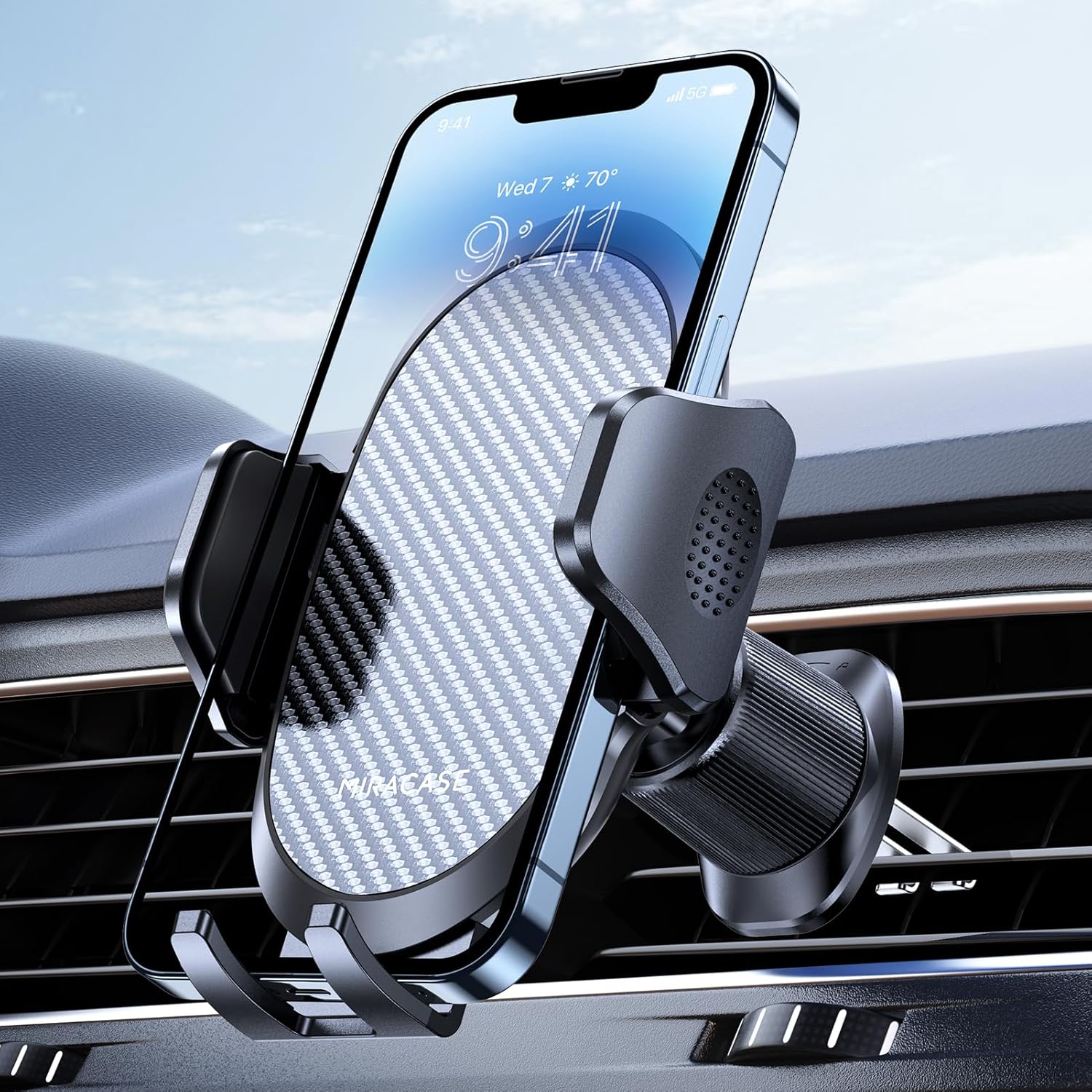
Useful fitment benchmark for deeper-fin grip and mixed case-size households.
Check Price on AmazonThese are the highest-risk fitment category for classic vent hooks. Contact points are smaller and shape mismatch is common.
If your vent is round/turbine-style, do not force a vent-first decision. A dashboard or windshield architecture is often more predictable long-term.
Quick fitment checklist before you buy
- Measure blade depth and confirm the hook can seat behind the fin.
- Check if surrounding trim blocks knob access.
- Confirm the mount head will not block hazard controls or key climate toggles.
- Test one-hand dock-undock from your real driving posture.
- Re-check hold quality after rough roads and hot-cabin cycles.
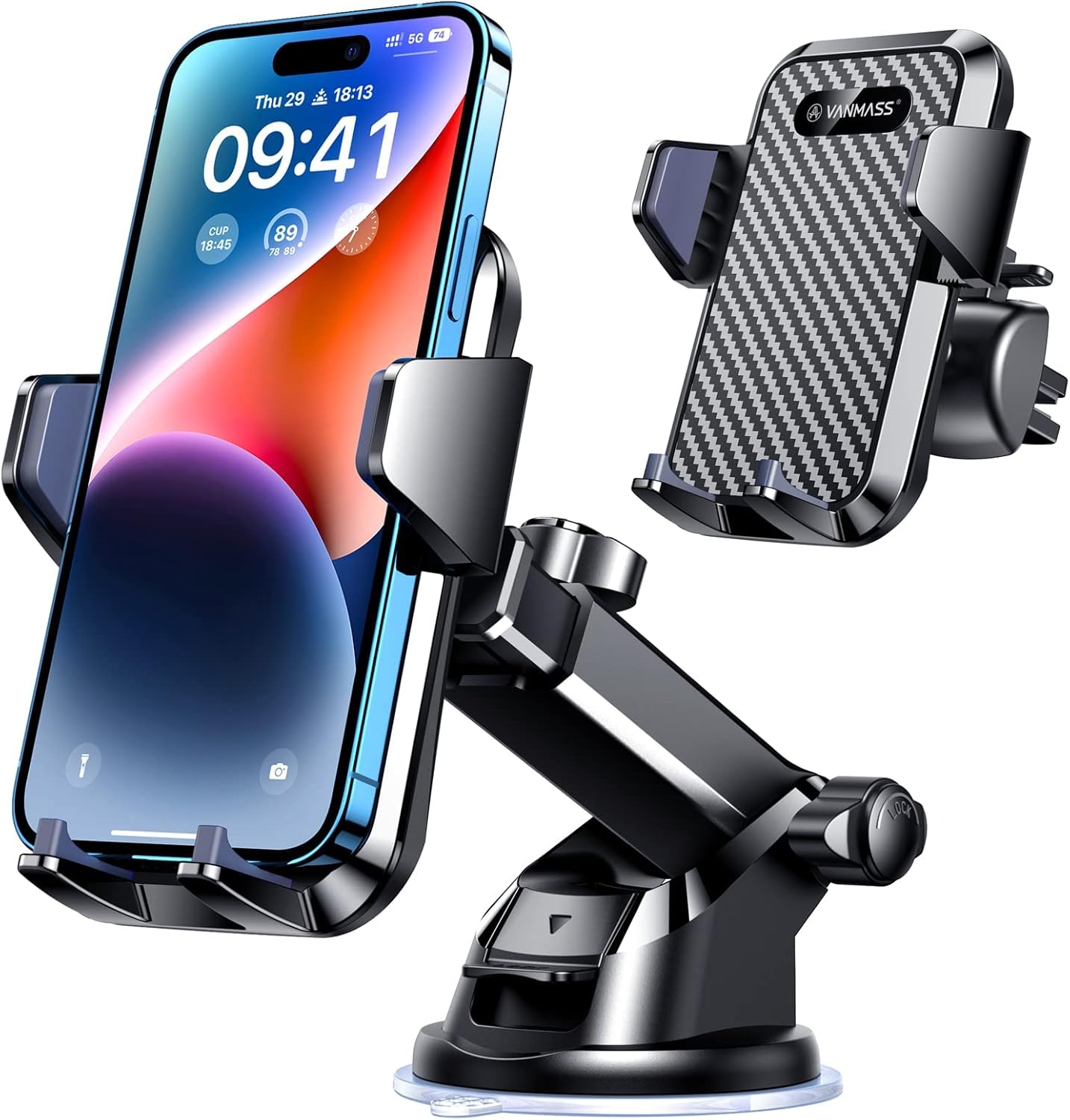
Fallback architecture when vent geometry is hostile to hook-style mounts.
Check Price on AmazonThis fitment workflow pairs well with One-Hand Docking Speed Test: 15 Mount Types Ranked by First-Try Success in Stop-and-Go Traffic, Phone Mount Micro-Vibration Test: 60-Minute Highway Blur and Readability Across Mount Types, and [Dashboard Suction Mount 30-Day Test: Heat Fade, Re-Stick Reliability, Windshield Vibration, and Drift].
Common compatibility mistakes
- Buying by "universal" label without vent geometry checks.
- Overtightening hooks and damaging fragile fins.
- Ignoring case thickness during clamp-width setup.
- Choosing vent placement that blocks critical controls.
- Evaluating fit while parked only, then discovering drift in motion.
Product-level examples by vent scenario
For mainstream horizontal vents and balanced daily value, compare Lamicall 2026 Wider Clamp Vent Mount Review: Strong Daily Value with Real Vent-Mount Limits and Blukar 2025 Metal-Hook Vent Mount Review: Budget Price, Real Stability.
For higher-retention vent-hook behavior in mixed-case households, [Miracase Car Phone Holder with Metal Hook Clip: Practical Vent Stability for Daily Driving] is a useful reference. If your vent geometry is hostile to hooks, switch architecture and benchmark against VANMASS 85+LBS Car Phone Mount Review: Strong Hold, Real-World Tradeoffs.
Final takeaway
The best vent mount is not the one with the loudest specs. It is the one that matches your vent geometry, driving routine, and one-hand workflow with low correction burden over real weeks.
In 2026, compatibility-first buying beats feature-first buying almost every time.
Review articles
View all →
![ANDERY Car Phone Holder for Magsafe [78+LBS Strongest Suction] - article prod...](https://m.media-amazon.com/images/I/41vEvhI9M7L._AC_SL1500_.jpg)