
CD Slot vs Vent Mount 30-Day Test: Stability, Reach, and Daily Usability in Older Cars
Keywords: cd slot vs vent mount test, cd slot phone mount real life test, vent mount stability older cars, 30 day phone mount comparison, cd slot mount daily usability, vent mount angle drift test
CD-slot mounts are easy to overlook because newer cars often ship without CD players, but in older vehicles they can solve problems that vent mounts never fully fix. Weak vent slats, odd vent angles, and shaky road surfaces can turn a good-looking vent mount into a daily frustration.
This was not a one-afternoon comparison. I used repeated city loops, suburban patched roads, and highway segments between roughly 65 and 75 mph. I logged what a driver actually notices over time: mounting stability, one-hand docking consistency, angle retention, vibration blur on map text, and whether the setup became more annoying after two or three weeks of normal use.
If you are deciding quickly, this article is best read alongside Suction Cup vs Vent Mount: When Which Is Better?, Best Phone Mounts for Vertical Air Vents: 2026 Edition, and Heat and Shock Tests: Car Phone Mount Safety Explained. Those explain the bigger decision framework. This one goes narrower: CD-slot versus vent, over a full month, with an older-car bias.
How I ran the test
I alternated CD-slot and vent installs on similar daily routes so road conditions stayed comparable. Every session included a practical checklist: did the mount shift after repeated braking, did map text remain readable on rough pavement, did the phone dock cleanly with one hand, and did the setup need mid-week re-tightening.
I also included hot-cabin checks after direct-sun parking because thermal cycles often reveal weaknesses that calm-weather testing hides. A mount that feels perfect in mild temperatures can start micro-shifting once interior plastics warm up.
Week 1: Vent is faster, CD feels calmer
In week one, vent mounting won on speed. Installation is quick, and for many drivers the phone lands in a familiar line of sight right away. But even in the first week, the CD-slot setups felt calmer under rough-road vibration. The difference was not dramatic wobble versus no wobble; it was subtle repeatability. CD-slot position tended to stay where I set it with fewer tiny corrections.

Useful dual-mode reference for drivers comparing CD-slot consistency vs vent convenience.
Check Price on AmazonVent installs still felt excellent when vent geometry matched the clip. When geometry did not match, small movement showed up quickly, especially during lane changes and repeated stoplight starts.
Week 2: Geometry starts deciding winners

CD-slot-first baseline for straightforward one-hand daily use in older cabins.
Check Price on AmazonBy week two, fit geometry became the whole story. Strong hook-style vent mounts held well on compatible vents, but weaker or narrow slats developed little angle creep. CD-slot installs were more consistent in older cabins where vents were brittle, shallow, or already slightly loose from age.
The trade-off was reach. In some vehicles, CD-slot position sat lower than ideal, so glance ergonomics took more setup time. Vent placement usually gave better immediate reach, while CD-slot gave better long-run anchoring confidence.
Week 3: Daily usability gaps become obvious
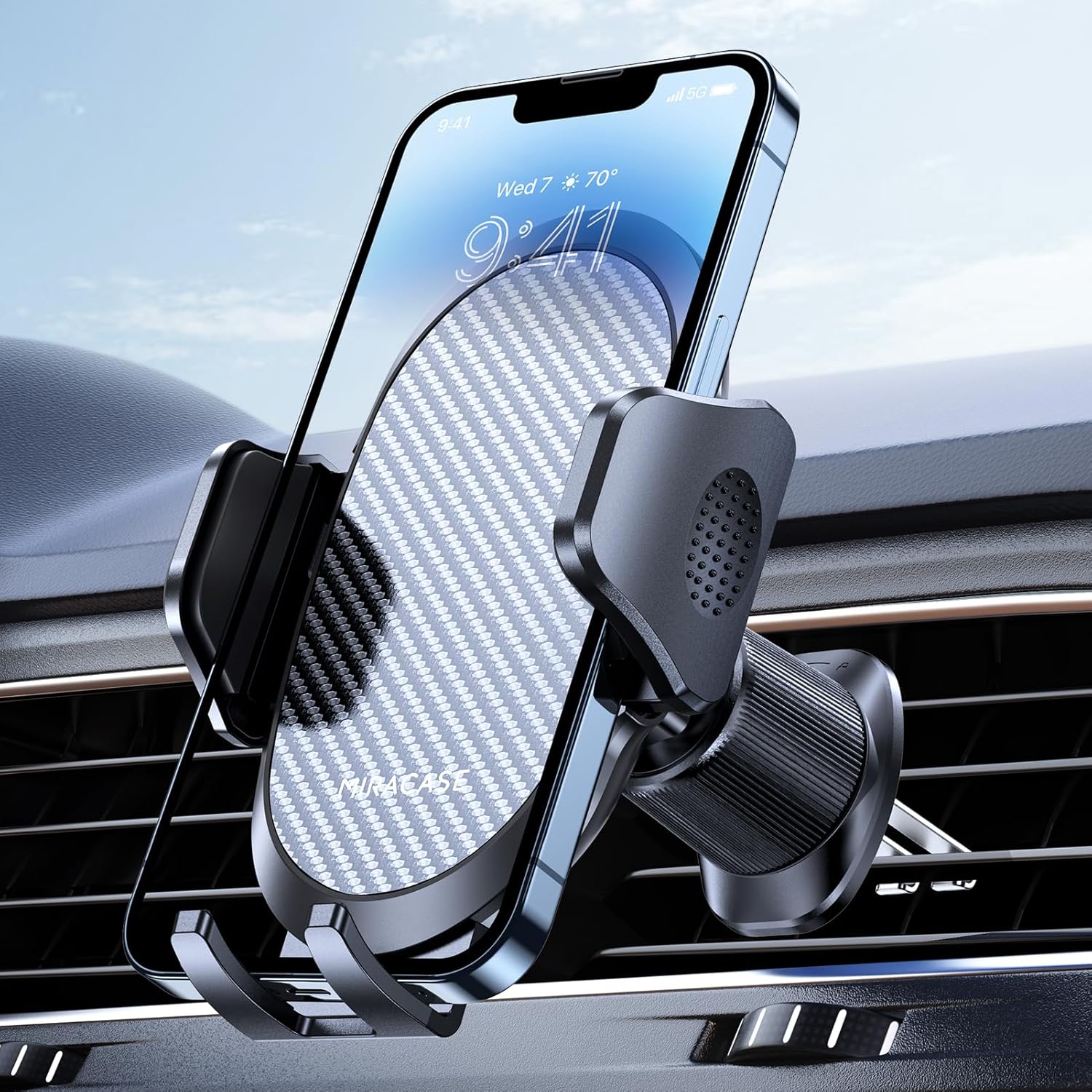
Vent-focused benchmark for hook-anchored stability on compatible vent geometry.
Check Price on AmazonWeek three was where preferences solidified. If your driving pattern includes lots of short trips and frequent dock/remove cycles, vent mounts still feel quicker in many cabins. If your pattern includes longer routes over patched roads, CD-slot stability became easier to appreciate because map text stayed steadier with less oscillation.
Another practical difference was maintenance behavior. Vent setups needed occasional re-checks in cars with thin slats. CD-slot setups needed less frequent adjustment once seated correctly, but only in vehicles where the CD slot itself had firm retention.
Week 4: What held up best
After a full month, neither style "won" universally. In newer interiors with strong vent geometry, a good vent mount remained the simplest daily option. In Property-by-property CD slot compare: CD Slot Phone Mounts Compared: VICSEED vs iOttie (Every Property Side by Side, 2026). older cars with weak vents or awkward slat placement, CD-slot mounting was the more dependable long-run choice.
The biggest takeaway: many bad mounting experiences are compatibility misses, not product failures. A mount can be well-built and still feel wrong if its anchor style does not match your interior hardware.
Product references used in this comparison
For CD-slot and hybrid reference points, I cross-checked behavior against VICSEED CD Slot & Vent Phone Mount: Versatile Clamp Design and iOttie Easy One Touch Signature CD Slot Mount: Reliable Mounting Without Suction or Adhesive.
For vent-only baseline behavior, I referenced Miracase Metal Hook Vent Mount Review and Lamicall 2026 Wider Clamp Vent Mount Review: Strong Daily Value with Real Vent-Mount Limits.
Who should pick what
Choose CD-slot first if: - your car has an accessible, stable CD slot - your vents are weak, oddly angled, or easily flexed - you care most about long-run stability over installation speed
Choose vent first if: - your vents are sturdy and compatible with hook-style clips - you want faster install/removal and higher immediate reach - you switch cars often and do not want to rely on a CD slot
Final human takeaway
If your cabin is older and your vents are questionable, CD-slot mounting deserves more respect than it usually gets. It is not trendy, but it can be boringly reliable, and boring reliability is exactly what a daily phone mount should deliver.
If your vents are strong and well positioned, vent mounting can still be the faster, cleaner everyday choice. The best move is to match the anchor style to your interior hardware, then judge the mount by week-three behavior - not day-one impressions.
For quick selection before deeper testing, use MagSafe vs Clamp vs Suction: Which Car Phone Holder Should You Buy in 2026? and Best Car Phone Holders by Driver Type: Commuter, Rideshare, Truck, Family, and Delivery Use Cases (2026).
For a shorter, tighter follow-up focused on daily correction burden, see [CD Slot Mount vs Vent Hook Mount in Older Cars: 21-Day Test on Vibration, Reach, and Daily Re-adjustment].
Review articles
View all →

