
How to Install a Phone Holder Without Damaging Your Car Dash
Keywords: how to install a phone holder without damaging your car dash, car phone holder without residue, install phone mount without damaging dashboard, vent mount vs adhesive dash mount, suction cup phone holder dashboard, safe dashboard phone holder install
A clean install is mostly about prep discipline, not luck. Most dash damage complaints come from rushed surface prep, wrong mount type for the material, or over-tightening where the trim cannot handle it.
Treat your dashboard like a set of different materials, not one surface. Hard plastic, soft-touch coatings, stitched trim, and textured panels each react differently to pressure, suction, and adhesive.
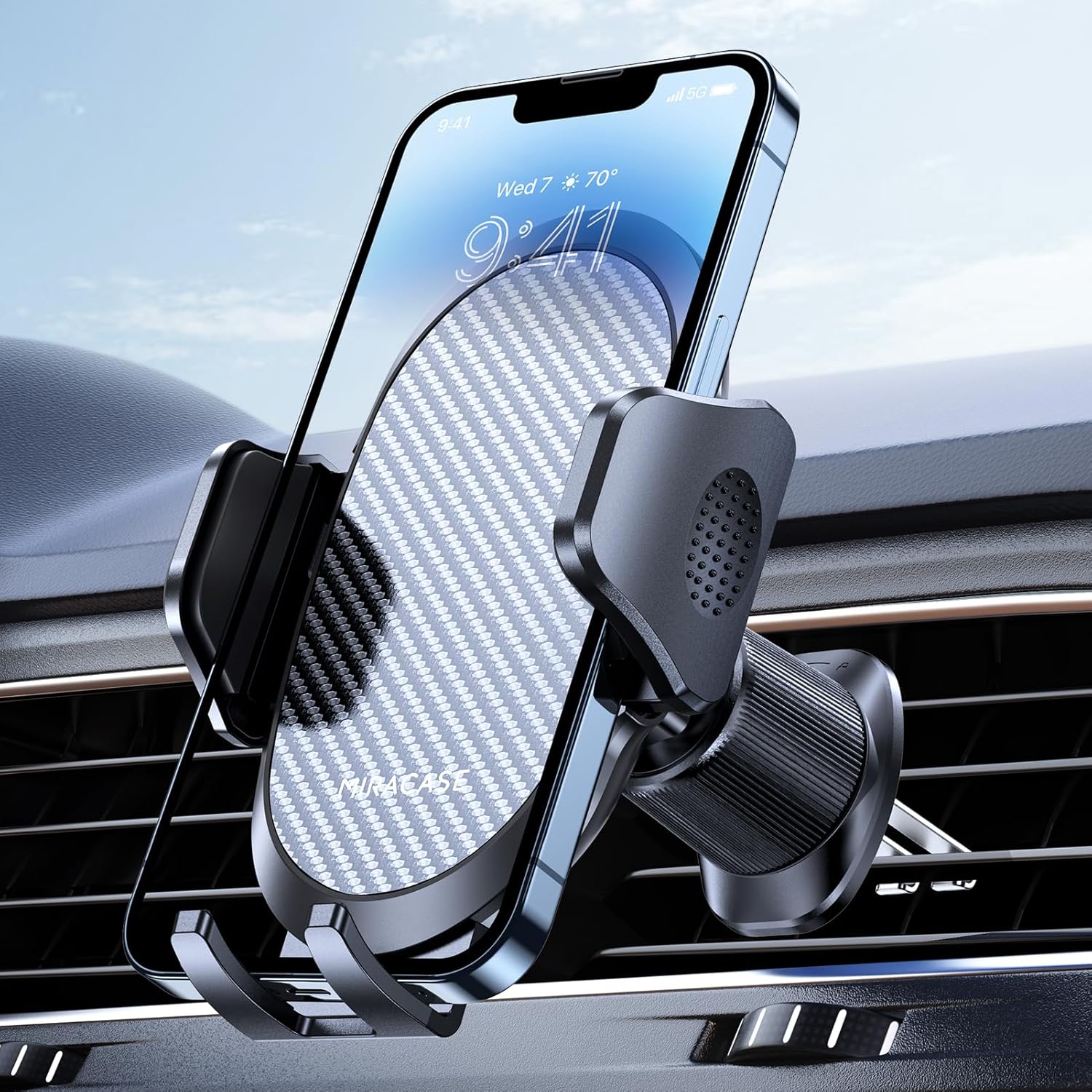
Vent-only mounting avoids dashboard contact entirely; metal hook design fits horizontal and vertical vents.
Check Price on AmazonIf you match mount type to surface and give prep a few extra minutes, long-term results improve dramatically. That short setup effort is usually the difference between a clean install and permanent marks.
When you do want windshield or dashboard placement, suction is usually safer than permanent adhesive as long as the surface is smooth and flat. A high-quality suction cup creates a seal without chemically bonding to the trim, so it can often be removed, cleaned, and repositioned with minimal trace. The key is using it only where it belongs. Do not force a suction cup onto heavily grained plastic, stitched trim, or curved surfaces. Clean the area first with a lint-free cloth, dry it fully, press the cup firmly, and lock the lever only after the base is flat. If your dash texture is too rough, use a compatible mounting disc or move the holder to the windshield rather than trying to make suction work where it should not.
![[2026 Military-Grade] Car Phone Holder VANMASS [Strongest Suction & Clip] - p...](https://m.media-amazon.com/images/I/512X87YSVuL._AC_SL1500_.jpg)
A flexible option if you want suction, windshield, or vent placement instead of committing to adhesive on the dash.
Check Price on AmazonAdhesive mounts require the most caution, but they do not have to ruin a dashboard if you install them properly. Cheap glue pads are the usual problem, not the idea of adhesive itself. Strong automotive-grade pads can hold extremely well, but they should only be applied to a surface that is truly suitable: clean, stable, not dusty, not softening in heat, and not coated with dressings or protectants. If you skip prep and slap the base onto a dirty or oily dash, the bond becomes inconsistent and removal gets messier later. If you want a low-profile dashboard setup, look for a mount that uses reputable 3M automotive adhesive, follow the cure time exactly, and avoid peeling it off repeatedly to "test" the location.
Preparation matters more than most people think. Wipe away dust, interior cleaner residue, and silicone dressing before mounting anything. Let the area dry completely. If the manufacturer recommends waiting 24 to 72 hours before placing the phone on the mount, do it. Drivers often blame the mount when the real problem is impatience. Heat also matters: installing adhesive on a freezing morning or a dashboard that has been baking in direct sun can weaken bonding and increase the chance of residue. Moderate temperatures and a clean surface give you the best chance of a secure hold without cosmetic damage.

Lets you test vent, windshield, or dashboard placement and keep whichever location works best without forcing one method.
Check Price on AmazonPlacement is just as important as the mounting method. Avoid fragile trim pieces, stitched decorative panels, airbag covers, and spots that receive extreme direct sun for hours every day. Keep the holder away from instrument clusters and surfaces that flex when you press them. On many cars, the safest place is not necessarily the prettiest one. A lower, flatter section of dash or a stable vent blade is often better than a glossy accent panel in the center. If you are unsure, test the viewing angle with your phone in your hand before committing. A mount that forces you to twist your body or blocks controls will tempt you to reposition it later, and repeated removal is what often causes the worst cosmetic wear.
Vent mounts, suction cups, and adhesive bases all have a place, so the right choice depends on how permanent you want the setup to be. If you lease your car or change vehicles often, choose vent or suction. If your vents are weak, round, or awkwardly placed, suction may be the better compromise. If you want the cleanest low-profile dashboard look and you are willing to prep carefully and leave it in one place for a long time, an adhesive mount can work well. The mistake is choosing based only on appearance or price. The safer approach is to choose the least invasive mount that still fits your car, climate, and driving habits.

A low-profile dashboard choice with genuine 3M automotive adhesive for drivers who want a cleaner semi-permanent install.
Check Price on AmazonOne overlooked way to protect your interior is to think about removal before installation. If you know you may take the mount off later, do not place it on delicate coatings or panels that are hard to warm and clean. Keep the original instructions if the brand provides removal guidance. For suction mounts, wash the cup instead of scraping at the dash. For adhesive mounts, warm the base gently and remove it slowly rather than ripping it off cold. For vent hooks, loosen the mechanism fully before pulling. Gentle removal is what keeps a good installation from turning into a cosmetic repair job.
The bottom line is that installing a phone holder without damaging your car dash is absolutely possible, but it depends on using the right mount in the right place and respecting the surface you are working with. Vent mounts are the best choice when you want zero dash contact. Suction mounts are a strong second option for smooth, flat areas and drivers who want repositionability. Adhesive mounts can also be safe when paired with high-quality materials, careful prep, and patience. If you choose deliberately instead of forcing the wrong mount onto the wrong surface, you can have a secure, easy-to-use phone holder and keep your interior looking factory-clean.
Where installs usually succeed or fail
If a mount felt fine on day one and sketchy a few weeks later, you are not alone. Most dash-damage stories start with speed: quick cleaning, cold-weather installs, or ignored cure times. Heat is the other half of the problem. A dashboard can get brutally hot in direct sun, and bond behavior changes fast when materials expand.
The easiest way to be safe is to use a method that matches the surface. Vent mounts avoid dashboard contact entirely. Suction mounts work best on smooth, flat glass/dash areas and should be removed/washed periodically so the seal stays healthy. Adhesive mounts can work cleanly, but only if you prep properly and apply to the right trim - then wait the recommended time before you press-fit or load the phone. If you are choosing a mount style based on that risk, revisit Suction Cup vs Vent Mount: When Which Is Better? and Heat and Shock Tests: Car Phone Mount Safety Explained for the bigger picture.
One install habit that prevents damage
My install habit: after placing adhesive, I leave it alone. Even when it feels secure immediately, bond strength keeps improving as it cures. That patience pays off later, especially in summer heat.
What really mattered after a few weeks: safe installs came from matching mount type to surface and giving the setup time. Dash materials vary more than people expect, and heat amplifies every shortcut.
Where people usually go wrong: rushed cleaning, cold installs, and repeated peel-and-restick testing. Those are the patterns that usually lead to residue and trim stress.
Done right, a phone holder should leave your interior looking untouched while staying stable in daily use. Careful prep is what makes both outcomes possible at the same time.
For a method-by-method prep comparison with stability outcomes, read Mounting Surface Prep Test: 12 Cleaning Methods Compared for Suction Hold, Adhesive Grip, and 14-Day Stability.
For full 2026 recommendations after installation best practices, see The Best Car Phone Mounts for 2026.
For a practical no-GPS old-car upgrade example after clean-install prep, read [My Car Doesn�t Have GPS, So I Tested the Best Car Phone Holders to Modernize My Ride].
For a practical no-GPS old-car upgrade example after clean-install prep, read My Car Doesn't Have GPS, So I Tested the Best Car Phone Holders to Modernize My Ride.
For a practical under-$30 setup that turns your phone into a dash cam after clean installation, read This Device Turned My Cell Phone Into a Dash Cam for Less Than $30.
For quick selection before deeper testing, use MagSafe vs Clamp vs Suction: Which Car Phone Holder Should You Buy in 2026? and Best Car Phone Holders by Driver Type: Commuter, Rideshare, Truck, Family, and Delivery Use Cases (2026).
For a packable mount routine that also works beyond car interiors, see I Always Take This Cheap Phone Mount on Bus, Plane, and Train Rides.
For a method-by-method prep comparison with stability outcomes, see Mounting Surface Prep Test: 12 Cleaning Methods Compared for Suction Hold, Adhesive Grip, and 14-Day Stability.
For cable-routing risk after clean installation, compare with CarPlay/Android Auto Cable-Interference Test: Mount Position vs Shift Access, Climate Controls, and One-Hand Docking.
Clean routing matters twice when a dash cam shares the glass. Practical zoning diary: Dash Cam and Phone Mount Together: 14-Day Windshield Zoning Test (Visibility, Cable Clutter, and Night Glare).
If washes expose marginal prep, start with trim-safe install habits, then read Touch Car Wash Survival Test: When Your Phone Mount Is in the Brush Zone (Suction, Vent Hook, and Adhesive).
If micro-stops force you to move placement, reinstall cleanly—pickup-line field notes: School Pickup Line Car Phone Mount Test: Micro-Stops, One-Hand Speed, and Mount Memory.
If you keep moving the phone for mirror sightlines, reinstall cleanly—Baby Mirror and Phone Mount Together: Sightline Triangle Test (Forward Scan, Rear-Seat Checks, and Safer Glance Time).
If you relocate mounts often for urban routines, keep trim-safe discipline—Street-Parking Phone Mount Habit Test: 14 Days of Quick-Remove Routines (Theft Anxiety vs Daily Friction). Pollen Season Field Test: Yellow Windshield Film, Dash Wipes, and Whether My Mount Still Trusted Suction (11 Days I Actually Drove).
Father's Day mount gift guide: Father's Day Car Phone Mount Gifts I Actually Installed: What Fits Dad's Car (and What He'll Return).
Graduation first-car field log: Graduation Week Field Test: First Car, Weird Dash, and the Mount I Didn't Regret Buying (12 Days I Actually Drove).
Review articles
View all →
