
Real-World Car Phone Holder Test Diary: 30 Days of Heat, Bumps, and One-Hand Use
Keywords: real life car phone holder test, 30 day phone mount diary, car mount heat test, one hand phone mount usability, phone holder vibration test, dashboard mount real world review
Most phone-mount reviews are written before real ownership begins. A short install test can look great, but ownership is morning traffic, hot parking lots, rushed errands, and repeated dock/remove cycles all week long.
The goal was simple: stop chasing spec-sheet promises and focus on what a driver notices without trying. Does the mount stay in the same angle after three days of rough roads? Can you dock the phone one-handed without looking down too long? Does afternoon heat weaken the base? Does it start squeaking, sagging, or turning into a little daily annoyance? If a mount is good, it should quietly disappear into your routine. If it is bad, it will remind you every single commute.
I used three repeat route types: city stop-and-go with speed bumps and sudden braking, suburban mixed pavement with patched seams, and highway stretches between 65 and 75 mph. Every evening I wrote down the practical details: re-dock success on first try, angle drift, vibration blur, clamp or magnet confidence, and whether I had to touch the base to re-tighten anything. I also parked in direct sun several afternoons because cabin heat exposes weak mounts faster than almost anything.
If you already read [Windshield Phone Mount 30-Day Real-Life Test: Visibility, Stability, and Daily Pros/Cons], this diary goes one layer deeper: less broad advice, more "what happened on day 4 vs day 24" detail. And if magnetic setups are your main target, pair this with 30-Day MagSafe Car Mount Test: What Holds Up, What Fails, and Why and Magnetic Mount Stability Test: MagSafe vs Metal-Ring Setups on Real Roads after this read. Together, those three pieces plus this diary give you a practical map instead of isolated opinions.

Balanced daily-use pick for drivers switching between dashboard, windshield, and vent setups.
Check Price on AmazonWeek 1 taught the usual lesson: first impressions flatter almost every mount. During the first two days, nearly all of them felt stable. The surprise came by day 5. The weaker designs did not fail dramatically; they started with tiny angle creep. A few millimeters lower by lunch, a small wobble on cracked pavement, and then one extra adjustment at a red light. That is exactly how many bad purchases hide themselves. They do not break instantly. They slowly ask for more of your attention.
One-hand usability separated products more clearly than I expected. Some mounts advertise one-hand operation, but in actual traffic they require a second nudge to center the phone or re-open the clamp. The better ones let me drop the phone in or snap it on while my eyes stayed where they should be. Fast one-hand interaction is not a luxury feature; it is a safety feature. A mount that takes two awkward corrections steals attention at the worst possible moment.
Heat performance was also less about dramatic collapse and more about consistency. In high cabin temperatures, weak adhesive pads felt fine in the morning and vague in late afternoon. Suction systems sometimes held but lost precision, meaning the arm stayed attached yet the viewing angle drifted over a few drives. In the diary, I marked this as "still mounted, less trustworthy" because that is how it feels from the driver seat. Technically attached is not the same as confidently usable.
![[2026 Military-Grade] Car Phone Holder VANMASS [Strongest Suction & Clip] - p...](https://m.media-amazon.com/images/I/512X87YSVuL._AC_SL1500_.jpg)
Strong reference for long-run clamp stability and vibration control on mixed roads.
Check Price on AmazonVibration behavior told a similar story. The strongest entries did not eliminate movement completely; they damped it quickly and returned to center without extra hand input. The weaker entries oscillated longer, especially with heavier phones and thicker cases. When navigation text blurs on rough patches, your eyes linger longer than they should. That extra half-second glance, repeated over weeks, is exactly why mount stability matters beyond convenience.
A pattern I did not expect: mounting surface quality mattered more than brand ranking. Two drivers can buy the same model and report opposite experiences because one dashboard texture supports a clean seal while another introduces micro gaps. That is one reason broad internet opinions feel contradictory. The mount is only half the system. The vehicle surface, case thickness, phone weight, and climate are the other half. Good reviews should say this clearly instead of pretending one answer fits everyone.
For value, the diary backed up what I argued in [High Price Doesn’t Always Mean High Quality]. The best-performing setup in week three was not the most expensive one. It was the one that matched installation geometry and held its adjustment day after day. Premium materials can help, but they do not save a bad fit. If you buy only by price tier, you are gambling. If you buy by mounting method and your daily route reality, you are making a decision.
What actually won over thirty days was boring reliability: fast docking, low drift, no dramatic maintenance, and predictable behavior after heat and bumps. The best mount is the one that feels exactly the same on day 27 as it did on day 3. That kind of consistency sounds unexciting, but that is the whole point. In a car, boring is good. Boring means you are not troubleshooting your mount while turning across traffic.
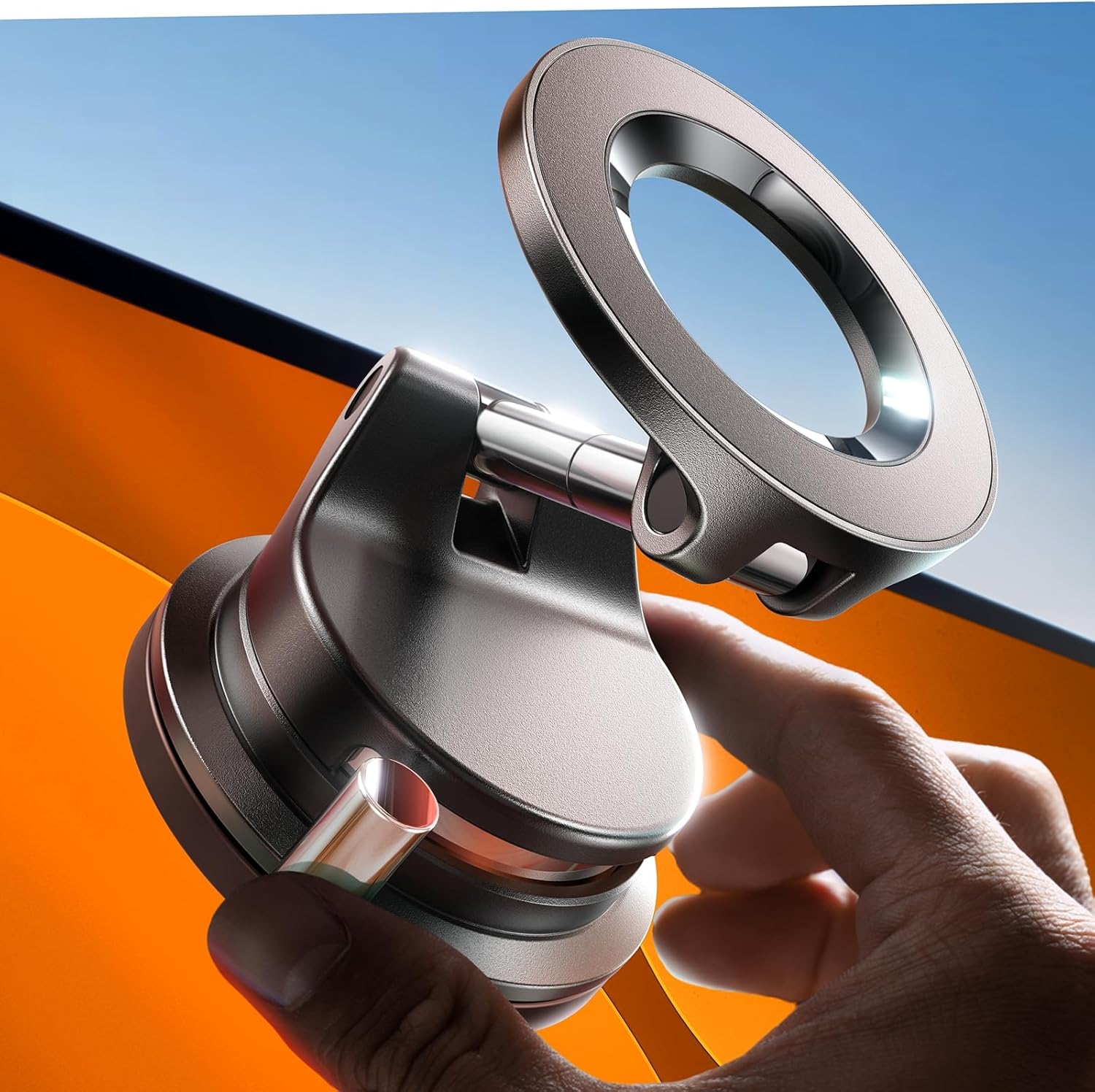
Fast one-hand magnetic docking with solid heat-cycle consistency in repeated commuting.
Check Price on AmazonIf you want a practical buying shortcut from this diary, start with your usage pattern, not product marketing. If you move the mount between cars often, portability and quick reseal matter more than maximum hold claims. If you mostly run long navigation sessions, prioritize anti-vibration behavior and angle retention. If your car bakes in the sun, give heat consistency more weight than flashy materials. Choose for your routine, and your odds improve immediately.

Portable vacuum-plus-magnetic option for smooth-surface users who need flexible placement.
Check Price on AmazonAfter thirty days, my checklist is short and ruthless: one-hand docking success in a hurry, stable angle after a full hot afternoon, minimal blur on patched roads, and zero need to re-tighten during normal weekly use. Any mount that misses two of those points is out, even if the product page sounds impressive. Real-life testing cuts through marketing fast.
For quick selection before deeper testing, use MagSafe vs Clamp vs Suction: Which Car Phone Holder Should You Buy in 2026? and Best Car Phone Holders by Driver Type: Commuter, Rideshare, Truck, Family, and Delivery Use Cases (2026).
The diary reinforced one simple idea: the right mount disappears into your routine, while the wrong one keeps demanding your attention. If this article saves you from one bad purchase, it did its job.
For a complementary rhythm test focused on repeated curbside-style stops, read School Pickup Line Car Phone Mount Test: Micro-Stops, One-Hand Speed, and Mount Memory.
For another ownership diary angle on daily friction, pair with Street-Parking Phone Mount Habit Test: 14 Days of Quick-Remove Routines (Theft Anxiety vs Daily Friction).
Review articles
View all →
