
Mount Arm Joint Fatigue Test: 45-Day Hinge Wear, Sag Rate, and Re-Tightening Frequency Across Mount Types
Keywords: mount arm joint fatigue test, car phone mount sag rate, hinge wear phone mount, mount retightening frequency, long-term car mount durability, telescoping arm mount wear
Most phone mount reviews focus on day-one stability. The part that usually fails first is not always the base - it is the arm joint system. After a few weeks of one-hand dock/undock, road vibration, and repeated angle changes, some mounts start to feel looser, sit lower, or need frequent re-tightening just to stay usable.
This test tracks exactly that long-run behavior. Over 45 days, I measured hinge wear feel, sag progression, and correction frequency across common mount types to answer one practical question: which arm designs stay predictable with daily use, and which ones drift into maintenance mode.
If you want baseline context before this durability deep dive, start with Telescoping Arm Mount 30-Day Test: Sag, Joint Wear, and Highway Readability, Phone Mount Micro-Vibration Test: 60-Minute Highway Blur and Readability Across Mount Types, and Pothole Test for Car Phone Mounts: 100 Sharp Hits and First-10-Minute Re-Aim Results. For temperature-related interaction changes, Cold Morning Car Mount Test (0-10C): Clamp Stiffness and First-Dock Reliability is a useful companion.
How the 45-day fatigue test was run
I kept route patterns consistent: city stop-go starts, patched suburban roads, and repeated highway segments with sustained vibration. Each mount stayed in real daily use with normal one-hand docking habits instead of careful lab-only handling.
Daily logs focused on: 1) visible arm angle change from baseline 2) hinge resistance feel over time 3) re-tightening frequency per week 4) post-bump settle behavior 5) readability drift at normal glance angle 6) overall attention tax (how often I needed to touch the mount)
I also tracked warm-cabin and cooler-start behavior because material stiffness can mask or exaggerate joint wear at different times of day.
Days 1-10: almost all setups feel solid
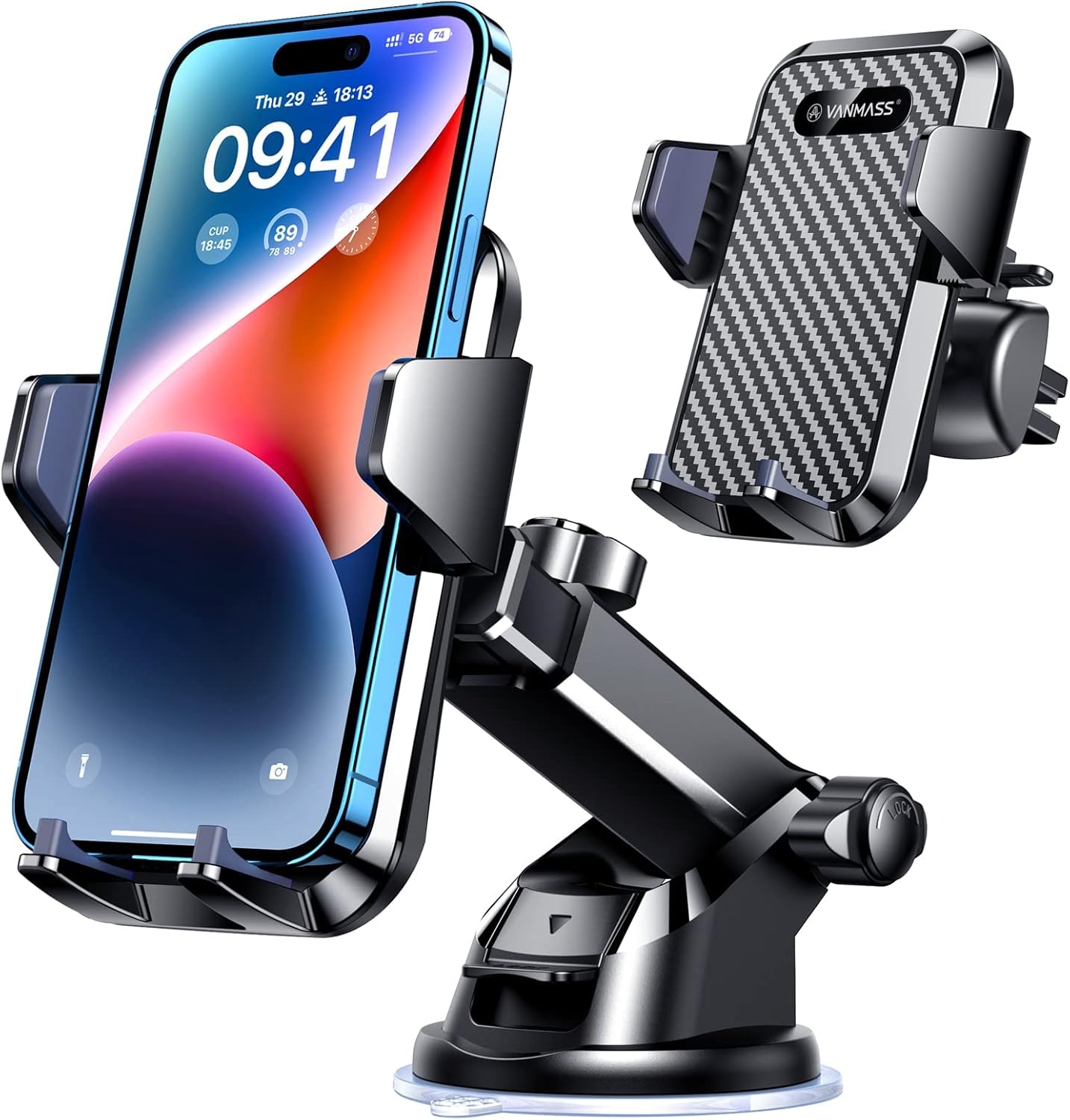
Strong control baseline for long-run arm stability under mixed-road use.
Check Price on AmazonEarly results looked reassuring across most mounts. Joint movement felt controlled, and sag changes were minimal. This is why buyers often overestimate long-term reliability after a short test window.
Even here, subtle differences appeared. Some arms returned to the same angle naturally after bumps. Others held fine but showed tiny settling behavior that suggested future drift potential.
Days 11-20: first signs of fatigue pattern
By the second phase, design differences became clearer.
Useful reference for hinge consistency during repeated one-hand docking cycles.
Check Price on AmazonBetter systems maintained hinge resistance with little day-to-day change. Average systems still worked, but began to show mild angle creep after rough segments, especially with heavier phones or thicker cases.
No dramatic failures yet - just the start of correction habits. In real commuting, those small habits are early warning signals.
Days 21-30: sag rate starts affecting readability
This phase was where usability impact became obvious. Small arm sag started pushing some setups below the original eye-line preference, which increased glance correction and touch re-aims.

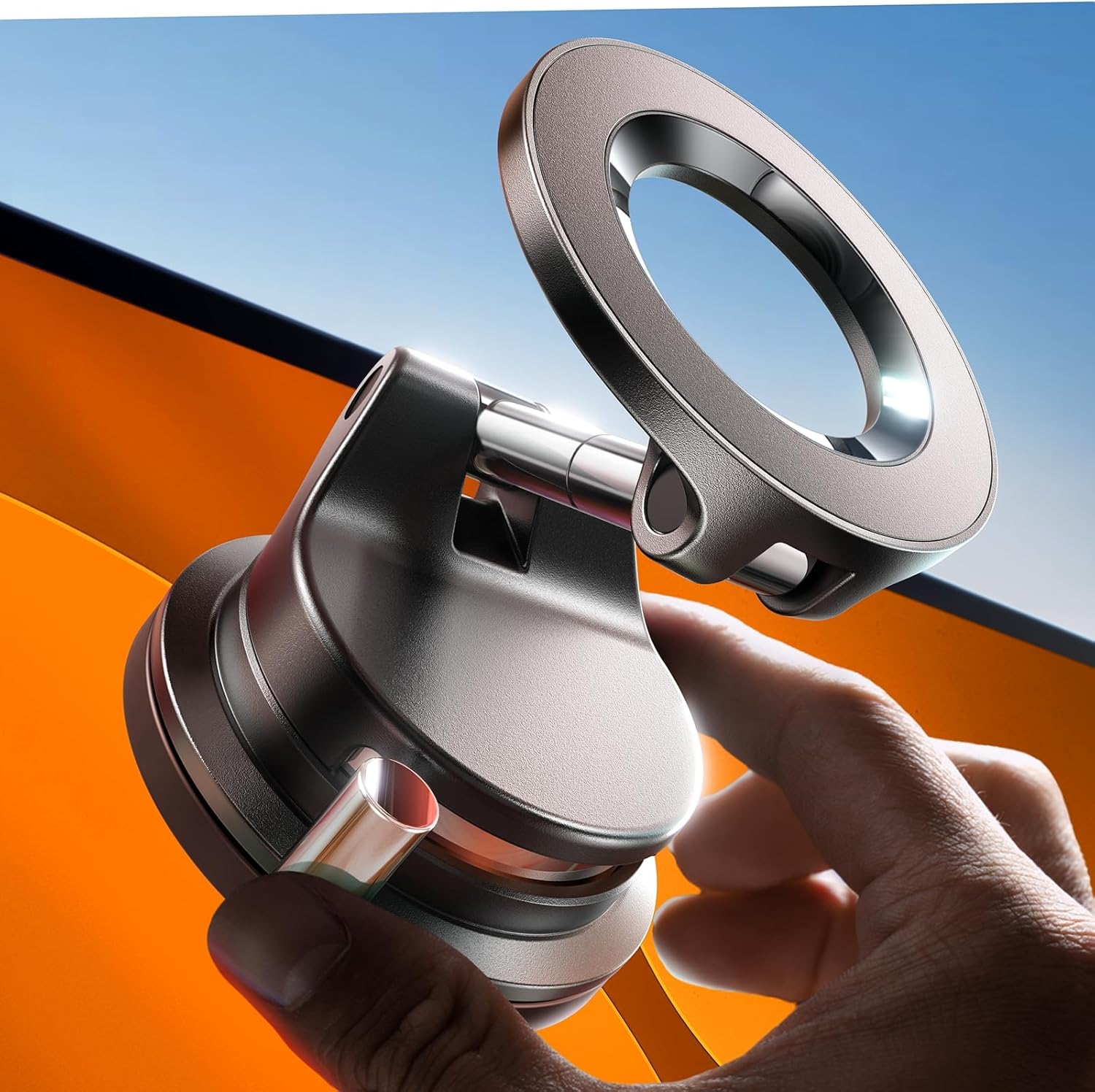
Comparison point for foldable-joint fatigue and sag progression over long daily use.
Check Price on AmazonThe strongest performers did not just resist movement; they recovered quickly after bumps and stayed close to baseline angle without frequent adjustment. Weaker performers required periodic re-tightening or re-positioning to preserve comfortable visibility.
This is where Car Phone Mount Noise Test: Rattle, Creak, and Vent Buzz Over 200 km of Mixed Roads also connects: as joints loosen, acoustic irritation often appears before complete instability.
Days 31-45: long-run ownership verdict
At the end of 45 days, the winners were the mounts with predictable joint behavior under repetition, not the mounts with the loudest first-day grip claims.

Vent-side anchor for tracking arm drift and re-tightening burden over 45 days.
Check Price on AmazonBest long-run traits: - stable hinge resistance across repeated adjustments - low sag progression under mixed-road vibration - minimal re-tightening demand - consistent glance angle without daily correction
Common weak patterns: - incremental arm drop over rough-road weeks - growing dependence on manual re-tightening - increased micro-adjustments after commute clusters
Most underperforming systems stayed usable, but became mentally expensive because they demanded ongoing attention.
What this means for buyers
If your priority is long-term comfort, evaluate arm-joint behavior as seriously as mount base type. A strong base with weak joint fatigue resistance still leads to daily annoyance.
Practical buying filter: - low correction count after 2-3 weeks - predictable angle retention after vibration - minimal need to re-tighten under normal use - stable readability on your real route, not just smooth roads
If you regularly drive rough segments, pair this with Pothole Test for Car Phone Mounts: 100 Sharp Hits and First-10-Minute Re-Aim Results and Phone Mount Micro-Vibration Test: 60-Minute Highway Blur and Readability Across Mount Types to judge both impact recovery and long-run hinge drift together.
Product-level alignment from this test
Observed fatigue patterns matched practical behavior seen in VANMASS 85+LBS Car Phone Mount Review: Strong Hold, Real-World Tradeoffs, LISEN A608 MagSafe Vacuum Mount Review: Strong Hold, Fast Repositioning, and Real-Use Tradeoffs, BISART A7 Vacuum Magnetic Mount: Real-World Look at Suction, Magnets, and Mixed Reviews, and Lamicall 2026 Wider Clamp Vent Mount Review: Strong Daily Value with Real Vent-Mount Limits.
These references are useful because they reflect repeated use cycles where joint consistency matters more than launch-day impressions.
Final takeaway
Over 45 days, long-term mount quality was mostly about fatigue behavior: how slowly a joint wears, how little it sags, and how rarely it needs intervention. In real driving, that quiet consistency is what makes a mount feel premium.
If your current holder keeps sliding lower week by week, trust that signal. Sag rate and re-tightening frequency are not minor details - they are core durability metrics.
For shared-use touch frequency and post-hand-off stability, compare with Passenger-Side Reach Test: 25 Daily Hand-Off Scenarios for Driver-Passenger Sharing, Dock Speed, and Safety.
When slow sag shifts your panel into a worse polarized viewing angle over weeks, compare with Polarized Sunglasses Phone Screen Test: LCD vs OLED, Mount Angle, and Safer Glance Time in the Car.
For airflow-amplified hinge drift in convertible/open-window use, compare with Convertible Top and Open-Window Vibration Test: Mount Stability, Wind Noise, and Glance Readability at 30-70 mph.
For quick selection before deeper testing, use MagSafe vs Clamp vs Suction: Which Car Phone Holder Should You Buy in 2026? and Best Car Phone Holders by Driver Type: Commuter, Rideshare, Truck, Family, and Delivery Use Cases (2026).
For shared-use handover cycles that accelerate memory drift, compare with Shared Vehicle Memory Test: Keep Mount Position Consistent Across Two Drivers Without Daily Re-Adjustment.
Review articles
View all →
