
Car Phone Mount Noise Test: Rattle, Creak, and Vent Buzz Over 200 km of Mixed Roads
Keywords: car phone mount noise test, phone holder rattle and creak comparison, vent mount buzz on rough roads, highway mount noise 200 km test, quiet car phone mount evaluation, mount joint creak diagnosis
A mount can hold your phone perfectly and still ruin the drive with constant small noises. This test isolates that real-world annoyance by measuring rattle, creak, and vent buzz over 200 km of mixed roads, then comparing which mount setups stay quiet after repeated rough segments.
That is why I ran this test. Over 200 km of mixed roads, I compared common mount behaviors through one practical lens: cabin noise impact during real driving.
This is not an NVH lab test. It is a commuter reality test: patched roads, speed humps, coarse asphalt, highway expansion joints, and normal in-car audio levels.
If you want broader context first, read Vent Hook Mount 30-Day Test: Slat Stress, Re-tightening Frequency, and Summer Stability, Telescoping Arm Mount 30-Day Test: Sag, Joint Wear, and Highway Readability, and [Phone Mount Micro-Vibration Test: 60-Minute Highway Blur and Readability Comparison Across Mount Types]. This article focuses specifically on sound behavior.
How I ran the 200 km noise test
Route mix used repeatedly: - city stop-go with frequent low-speed bumps - suburban patched surfaces - highway blocks with expansion-joint rhythm
I logged: 1) noise type (rattle, creak, buzz, click) 2) speed band where it appeared 3) trigger condition (braking, cornering, pavement texture) 4) persistence (random vs repeatable) 5) whether quick adjustment reduced it
The goal was not silent forever. It was identifying which setups stayed low-noise in normal use and which became attention-draining.
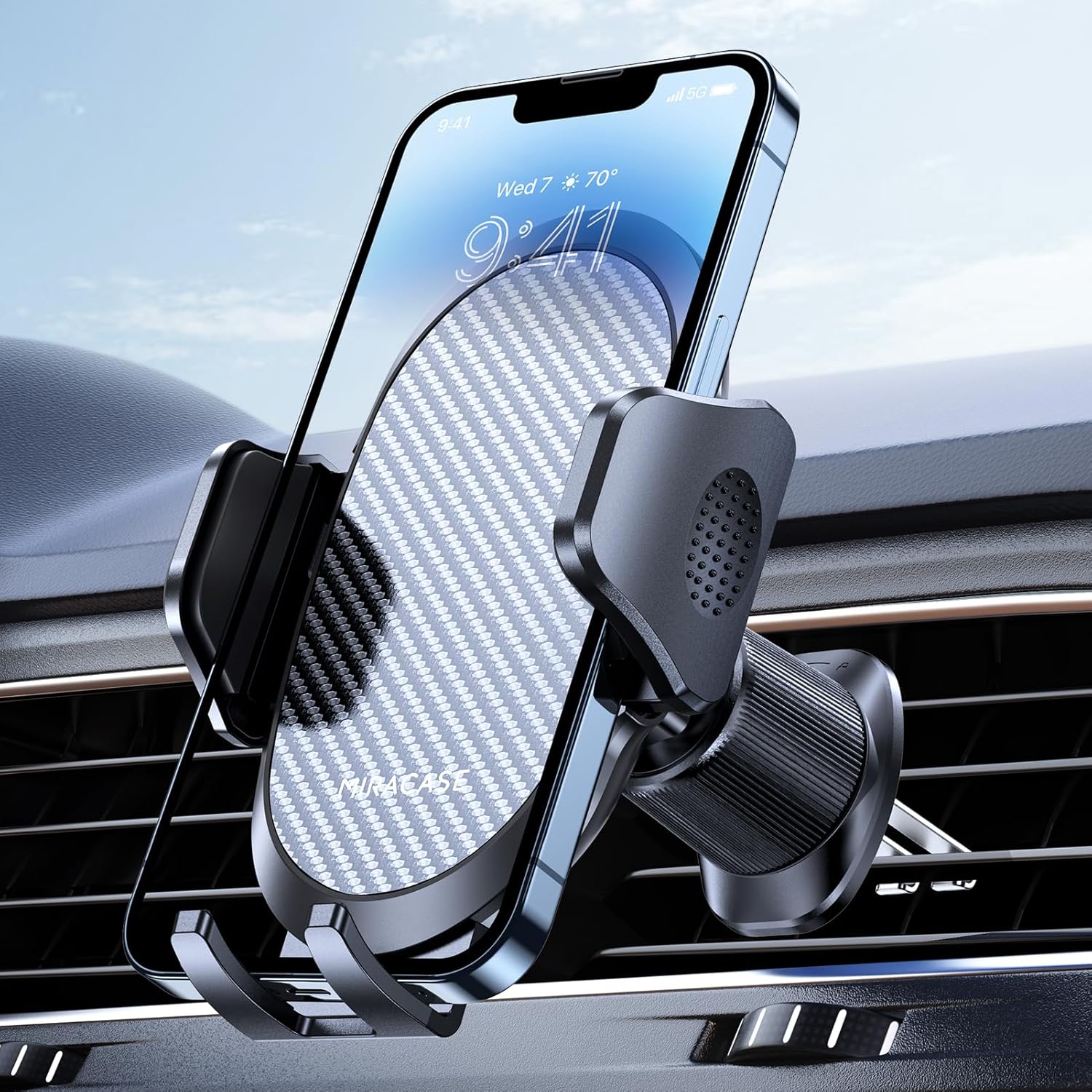
Useful vent-hook baseline for low-noise anchoring and slat resonance control.
Check Price on AmazonWhat noise types showed up most
Three patterns dominated: - vent buzz: often tied to slat resonance and clip tension mismatch - joint creak: usually from telescoping or articulated arm pivots - body rattle: small play between mount segments under repeated vibration
The key discovery: many noisy setups were still physically secure. Noise and safety are not the same metric, but noise strongly affects perceived quality.
Low-noise setup profile
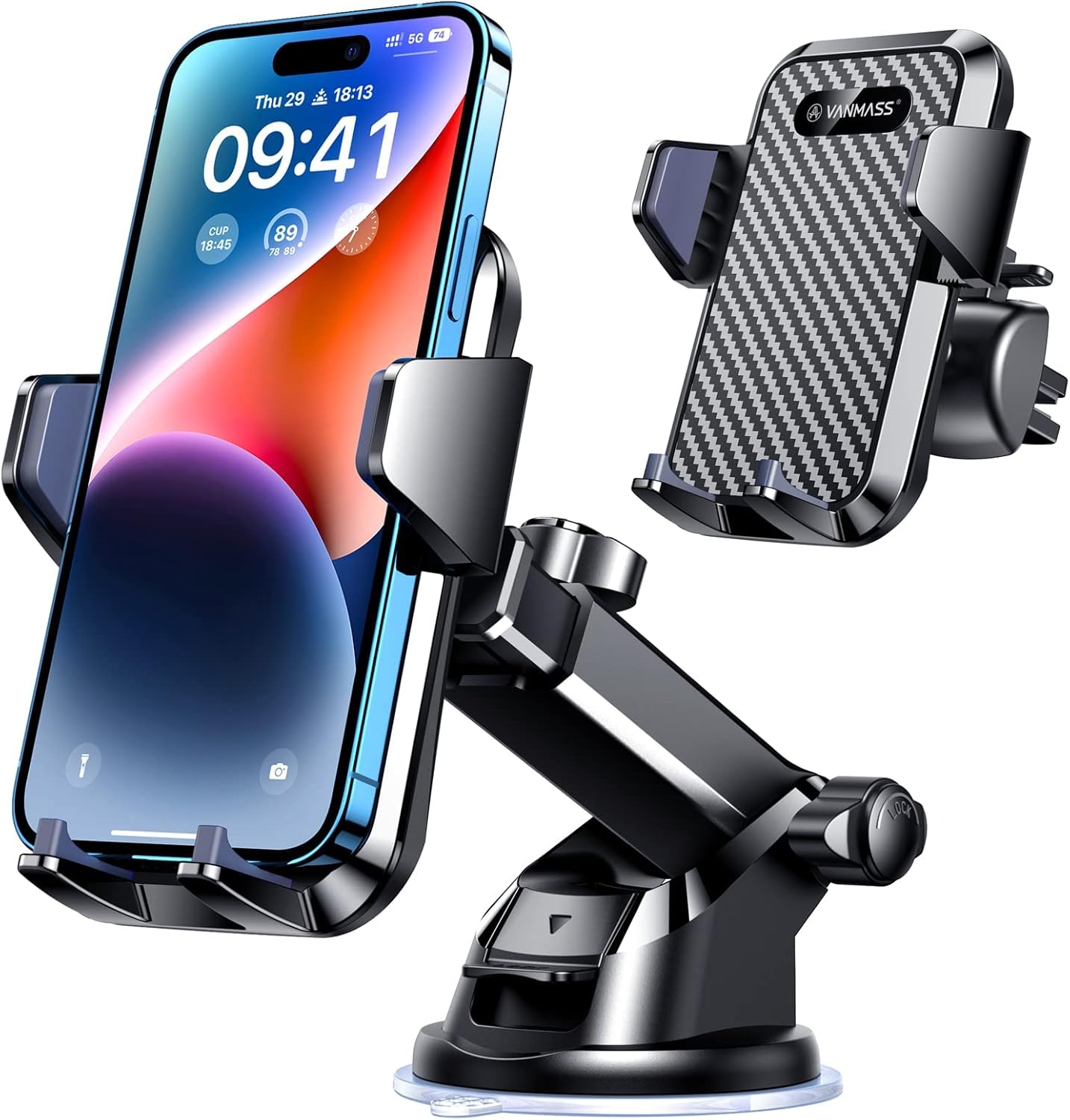
Reference for articulated geometry versus long-run cabin quietness.
Check Price on AmazonThe quietest performers shared these traits: - short, rigid load path - minimal free-play in joints - stable anchor engagement without over-tension
These setups were boring acoustically. On rough roads, they still transmitted vibration, but without persistent cabin chatter.
Medium-noise profile
Middle-tier setups were mostly quiet on smooth roads, but developed occasional repeat sounds on specific textures or speed bands.

Practical fit for evaluating vent-buzz behavior on mixed urban roads.
Check Price on AmazonThese can be acceptable for short commutes, but on longer drives the repeated frequency can become mentally fatiguing.
High-noise profile
Noisiest setups usually combined: - longer arm geometry near extension limits - small segment play in joint stacks - vent contact points prone to resonance
They were often fixable with setup changes, but out-of-box comfort was weaker.
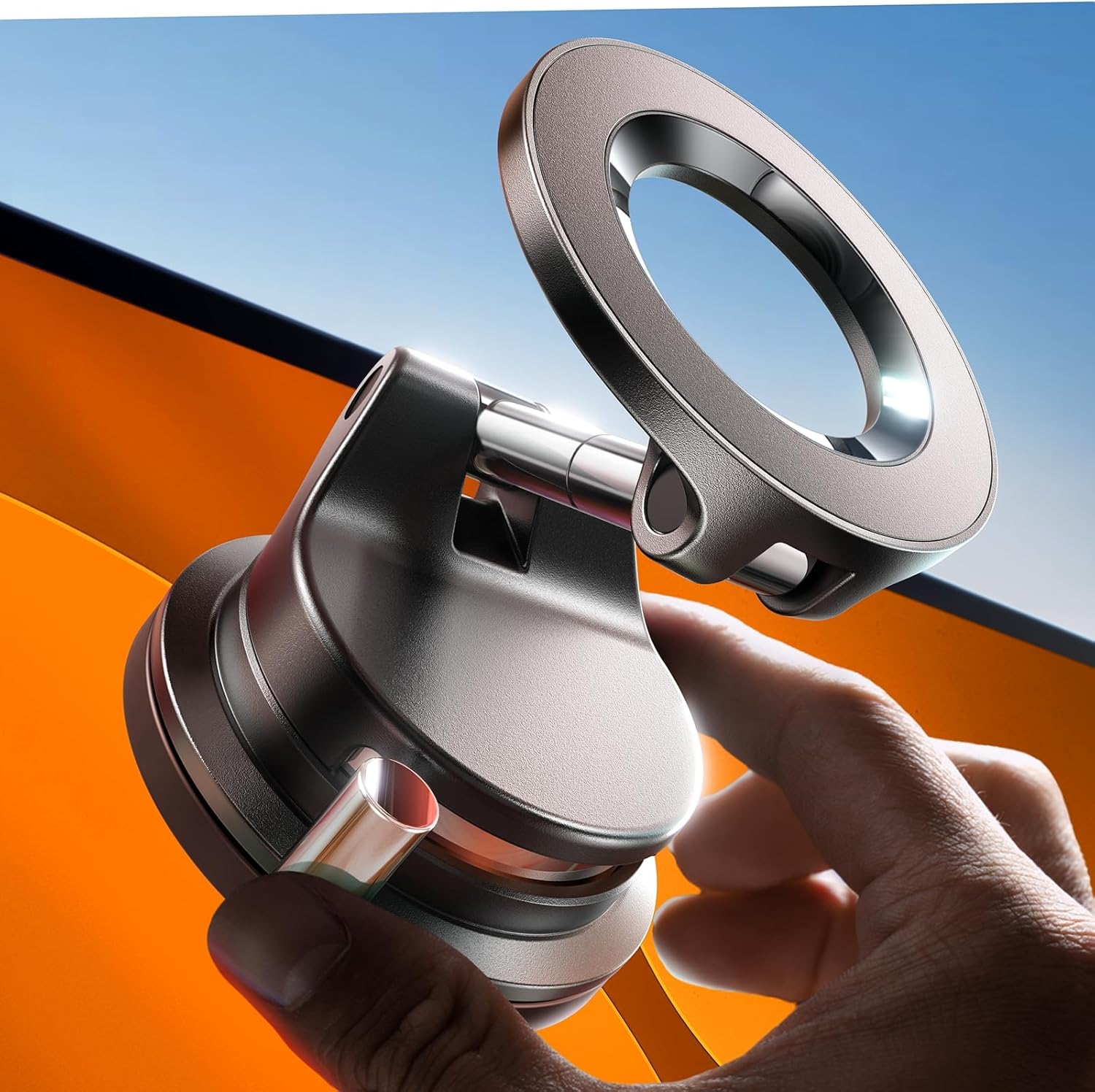
Suction/arm reference for joint creak and post-bump settle noise.
Check Price on AmazonCan noise be reduced without replacing the mount?
Often, yes.
The biggest improvements came from: - reducing arm extension one step - retightening with balanced pressure (not max force) - slight angle shift to exit resonance band - checking vent anchor contact symmetry
In many cases, a 2-minute adjustment reduced noise more than expected.
How this connects to readability and fatigue
Noise and micro-vibration often travel together. A setup that chatters at specific speeds usually has the same geometry traits that worsen screen shimmer.
That is why this article pairs well with [Phone Mount Micro-Vibration Test: 60-Minute Highway Blur and Readability Comparison Across Mount Types]. If a mount is noisy and visually busy, long-drive fatigue goes up quickly.
Review-level references that match these patterns
Noise behavior in this test aligned with practical usage notes in Miracase Metal Hook Vent Mount Review, VANMASS 85+LBS Car Phone Mount Review: Strong Hold, Real-World Tradeoffs, Lamicall 2026 Wider Clamp Vent Mount Review: Strong Daily Value with Real Vent-Mount Limits, and LISEN A608 MagSafe Vacuum Mount Review: Strong Hold, Fast Repositioning, and Real-Use Tradeoffs.
Those reviews are useful companions because they reflect repeated owner interactions where noise emerges after initial install novelty fades.
Quick noise-diagnosis checklist
When a mount starts making noise: - identify exact speed/road trigger first - reduce extension and re-test same segment - re-seat anchor with even pressure - check whether phone/case fit adds micro-play
This sequence isolates most recurring noise sources quickly.
Max AC week vent-mount field log: Max AC Week Field Test: Vent-Mount Buzz, Phone Cooling, and Hurricane Fan Speed (12 Days I Actually Drove).
Final takeaway
A mount can be secure and still be exhausting if it adds constant cabin noise. Over 200 km, the best setups were not just stable - they stayed acoustically calm across mixed road textures.
If your mount is technically fine but audibly irritating, treat noise as a real quality issue, not a minor annoyance. In daily driving, quiet consistency often matters as much as raw hold force.
For a textured-interior durability deep dive, see [Textured Dashboard Survival Test: 8 Mount Base Materials Compared for Creep, Noise, and Heat Cycling].
For high-shock rough-road behavior and immediate post-impact usability, see [Pothole Impact Recovery Test: 100 Sharp Hits Across Mount Types, Then First-10-Minute Re-aim Tracking].
For a broader ownership narrative that includes noise behavior, read Real-World Car Phone Holder Test Diary: 30 Days of Heat, Bumps, and One-Hand Use.
For quick selection before deeper testing, use MagSafe vs Clamp vs Suction: Which Car Phone Holder Should You Buy in 2026? and Best Car Phone Holders by Driver Type: Commuter, Rideshare, Truck, Family, and Delivery Use Cases (2026).
For top-down and windows-down noise plus stability interaction, see Convertible Top and Open-Window Vibration Test: Mount Stability, Wind Noise, and Glance Readability at 30-70 mph.
Speakerphone and voice assistant mount placement diary: Speakerphone and Voice Assistant Week: Mount Height, Cabin Noise, and the Geometry of “Can You Hear Me Now”.
Review articles
View all →
