
Passenger-Side Reach Test: 25 Daily Hand-Off Scenarios for Driver-Passenger Sharing, Dock Speed, and Safety
Keywords: passenger-side reach test, shared car phone mount setup, driver passenger phone handoff, car mount dock speed safety, shared navigation mount positioning, phone mount touch error rate shared use
Most mount advice assumes one user, one seat position, and one repeated routine. Real cars are messier. In shared driving - couples, families, rideshare shifts, delivery partner swaps - phone hand-offs happen constantly. A mount that feels perfect solo can become awkward when both driver and passenger need clean access without long glances or repeated re-aiming.
This test focuses on that neglected scenario. Across 25 daily hand-off situations, I tracked how well different mount positions support quick driver-passenger sharing while preserving dock speed, navigation readability, and safer interaction flow.
For an eleven-day household swap field log (iOttie vs Lamicall vs Kaistyle), read Household Phone Swap Week: 11 Days I Actually Drove (iOttie vs Lamicall Clamp vs Kaistyle MagSafe When Everyone Shares One Car). For context before this hand-off study, read One-Hand Docking Speed Test: 15 Mount Types Ranked by First-Try Success in Stop-and-Go Traffic, Portrait vs Landscape Navigation Test: 30-Day Turn-Clarity, Lane-Change Confidence, and Touch Error Rate, and Vent Mount Angle Optimization Test: 10 Position Setups for Glare, Reach, and One-Hand Safety. For glare-related readability tradeoffs during shared use, Summer Sun Glare Readability Test: 12 Mount Positions Compared for Navigation Legibility and Safer Glance Time is a useful companion.
How the 25-scenario hand-off test was run
I used daily mixed commutes with realistic role switching: driver starts navigation, passenger adjusts media, driver reclaims control, and occasional route checks from the passenger side. Scenarios included city stop-go moments, merge prep, parking-lot transitions, and short highway stretches.
Each scenario logged: 1) hand-off speed (phone passed/adjusted and back to stable state) 2) first-try dock success after hand-off 3) driver glance disruption time 4) passenger reach comfort and touch accuracy 5) mount re-aim frequency after shared interaction 6) perceived safety margin during active traffic segments
The goal was practical: lower friction and fewer risky micro-distractions while sharing one mount.
Scenarios 1-8: easy hand-offs are mostly about geometry

Vent reference for center-biased shared access and quick return-to-stable angle after hand-offs.
Check Price on AmazonEarly tests showed that geometry beat hardware marketing. Mounts placed too far driver-biased improved solo use but increased passenger stretch and touch misses. Overly passenger-biased setups reversed the problem and raised driver correction behavior.
Best early outcomes clustered around center-biased positions with moderate height and controlled tilt.
Scenarios 9-16: dock-speed and touch errors separate winners
Mid-phase results revealed the real costs of poor sharing setup. When hand-offs required angle compensation or wrist rotation, dock speed dropped and touch error rate rose for both users.
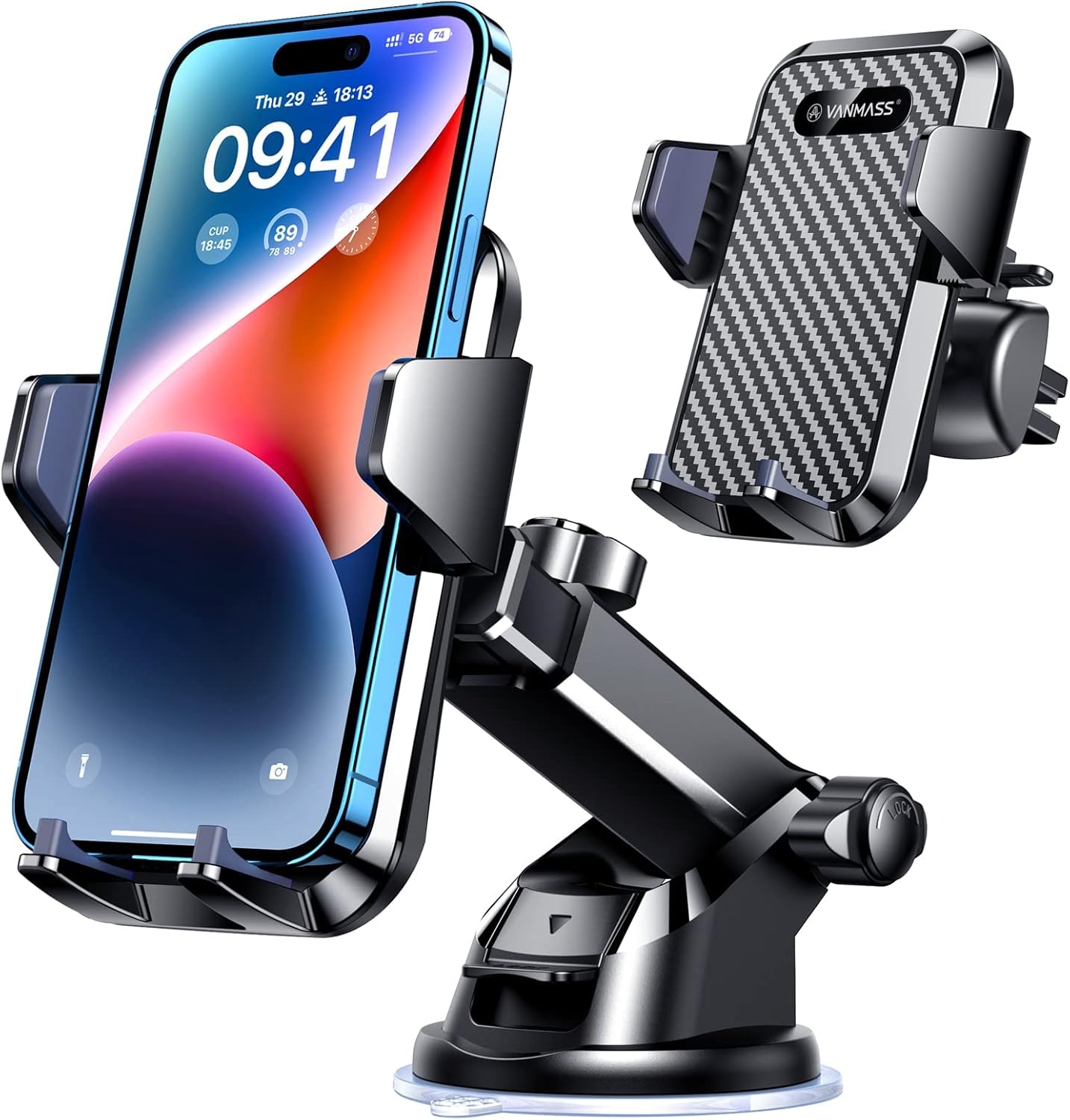
Hybrid baseline for evaluating driver-passenger reach balance across multiple seating patterns.
Check Price on AmazonGood shared setups preserved one-motion return-to-stable behavior. Weak shared setups triggered repeated tiny adjustments that accumulated into attention tax, especially in traffic-dense sections.
Orientation choice also mattered. Portrait often helped sequential turn detail confirmation, while landscape helped some passenger-side lane-context interpretation. The key was consistency, not one universal mode.
Scenarios 17-25: safety and confidence under repeated role switching
In final runs, the highest-scoring setups had three repeatable traits: - balanced reach for both seats without overextension - stable post-hand-off angle retention - low correction count after each interaction cycle
Useful comparison for fast hand-off recovery and one-motion redock consistency.
Check Price on AmazonLower-performing setups remained "usable" but increased second-check glances and re-aim touches. In shared driving, those small repetitions are the hidden safety risk.
What changed outcomes most
Three variables dominated: - lateral position (too far to one side penalized the other user) - vertical placement (too low increased glance time for both users) - hinge stability after touch input (weak joints amplified post-hand-off drift)
This aligns with long-run durability patterns in Mount Arm Joint Fatigue Test: 45-Day Hinge Wear, Sag Rate, and Re-Tightening Frequency Across Mount Types and impact-recovery behavior in Pothole Test for Car Phone Mounts: 100 Sharp Hits and First-10-Minute Re-Aim Results.

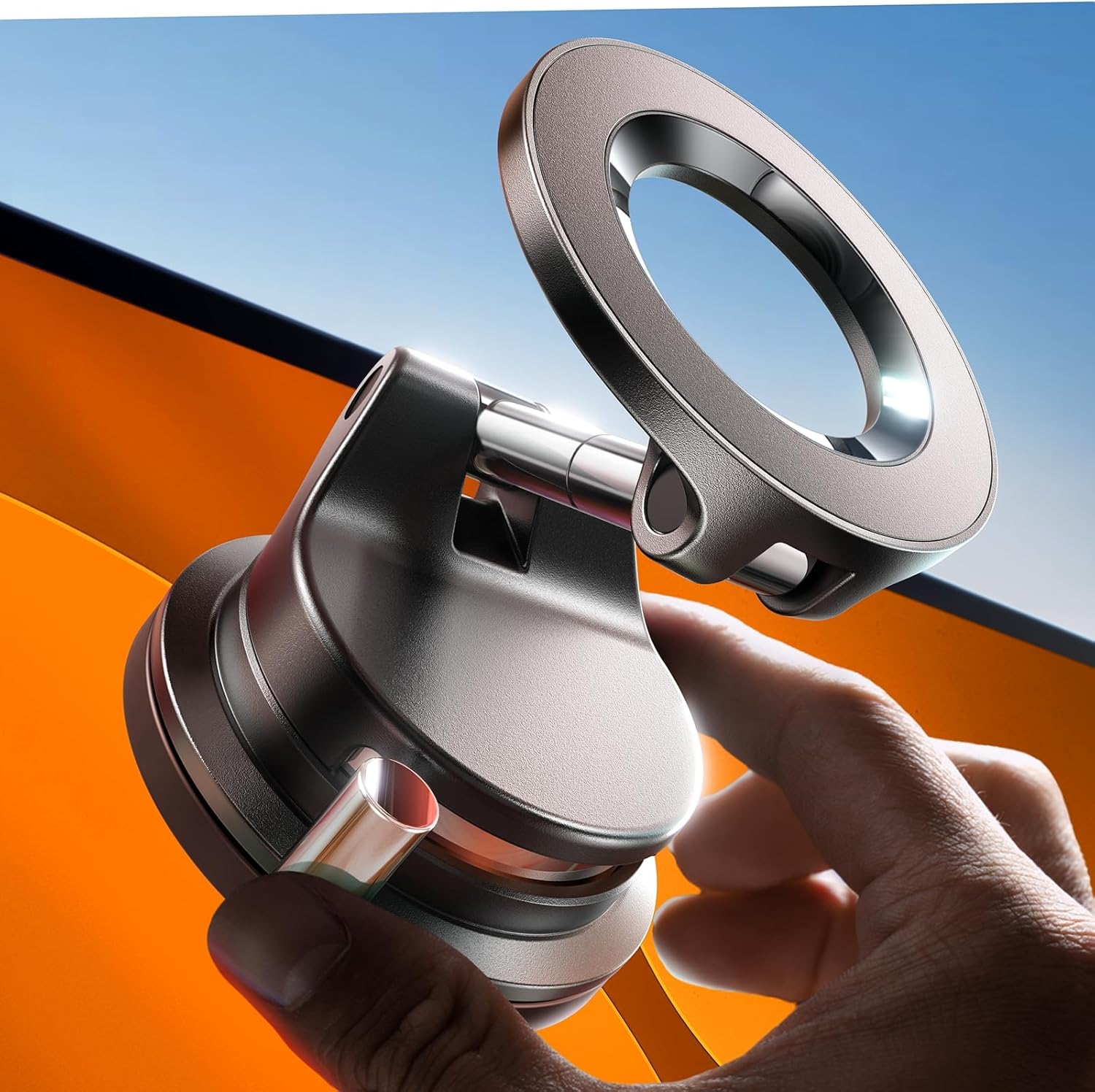
Magnetic control point for shared touch accuracy and low post-interaction correction burden.
Check Price on AmazonPractical setup rules for shared cars
If two people regularly interact with one mounted phone: - choose center-biased placement before brand upgrades - prioritize low re-aim count after each hand-off - keep tilt conservative to preserve readability for both seats - test during live traffic flow, not parked-only adjustments
A 5-minute parked fit check is not enough. Shared workflow quality only appears under real prompt timing and motion.
How this maps to product-level choices
Shared-use comfort patterns were consistent with practical behavior seen in Lamicall 2026 Wider Clamp Vent Mount Review: Strong Daily Value with Real Vent-Mount Limits, VANMASS 85+LBS Car Phone Mount Review: Strong Hold, Real-World Tradeoffs, LISEN A608 MagSafe Vacuum Mount Review: Strong Hold, Fast Repositioning, and Real-Use Tradeoffs, and VICSEED 2026 MagSafe Car Phone Holder: In-Depth Review.
For case-related hand-off drift, pair with Phone Case Thickness Impact Test: 30-Day Docking Accuracy, Magnet Strength Drop, and Reposition Rate.
For a fast style-level chooser before product shopping, also read MagSafe vs Clamp vs Suction: Which Car Phone Holder Should You Buy in 2026? and Best Car Phone Holders by Driver Type: Commuter, Rideshare, Truck, Family, and Delivery Use Cases (2026).
Uber and Lyft passenger week field log: Uber & Lyft Passenger Week Field Test: Airport Queue, PIN Handoffs, and Mount Placement (12 Days I Actually Drove).
Final takeaway
In shared driving, the best mount is the one that makes hand-offs almost invisible: fast return to stable angle, low touch mistakes, and minimal driver attention loss. Over 25 scenarios, balanced geometry and post-touch stability mattered more than isolated grip claims.
If your setup feels fine alone but clumsy with a passenger, that is not a minor inconvenience - it is a design signal. Shared-use efficiency is a real performance category.
For night commuting when cabin lighting and brightness hand-offs change glance safety, see Night Driving Glare Test: Screen Brightness vs Mount Height for Safer Glance Time.
For shared cabins during storms when brightness and reach change hands, see Rain and Fog Readability Test: Wet Glass, Mount Height, and Safer Glance Time in Low-Contrast Weather.
For tall-cabin reach geometry that changes both driver and passenger interaction zones, see Tall SUV and Pickup Seat-Height Test: Mount Position, Reach Arc, and Glance-Time Safety vs Sedans.
For two-driver memory consistency across daily swaps, see Shared Vehicle Memory Test: Keep Mount Position Consistent Across Two Drivers Without Daily Re-Adjustment.
For shared-driver handovers where app interaction models differ by user, read Map-App UI Density Test: Google Maps vs Apple Maps vs Waze on Mount Readability, Touch Error Rate, and Safer Glance Time.
Handoffs plus pickup-line cadence compound docking stress. Compare School Pickup Line Car Phone Mount Test: Micro-Stops, One-Hand Speed, and Mount Memory.
Family handoffs plus mirror checks tighten cabin workload. Diary: Baby Mirror and Phone Mount Together: Sightline Triangle Test (Forward Scan, Rear-Seat Checks, and Safer Glance Time).
Two-phone cabin workflow diary (work + personal): Two Phones, One Car: 14 Days of Work-and-Personal Mount Memory, Dock Order, and Charging Jealousy.
Family road trip multi-device mount zoning diary: Family Road Trip Week: Multi-Device Mount Zoning, USB Port Politics, and the Back-Seat Tablet Truce.
Review articles
View all →
