
Vent Hook Mount 30-Day Test: Slat Stress, Re-tightening Frequency, and Summer Stability
Keywords: vent hook mount 30 day test, vent slat stress phone holder, car vent mount retightening frequency, summer vent mount stability, metal hook phone mount durability, vertical vent hook mount test
Vent hook mounts are usually sold as the practical answer for drivers who are tired of suction cups and tired of flimsy spring clips. The promise sounds simple: hook behind the vent slat, tighten once, and stop thinking about it.
I ran this as a full 30-day real-life test because vent hooks are one of those products that can look excellent in week one and feel very different by week three. The goal was not to find the flashiest listing. The goal was to answer practical questions drivers actually care about: does the hook stay centered, does it chew up or deform the slat, how often do you need to re-tighten, and does summer heat make small looseness problems worse?
If you want broader context before this deep dive, read [Vent Phone Mount 30-Day Real-Life Test: Clip Fatigue, Heat Drift, and Rough-Road Stability], Best Phone Mounts for Vertical Air Vents: 2026 Edition, and Suction Cup vs Vent Mount: When Which Is Better?. For a shorter stop-and-go head-to-head against suction setups, read Magnetic Vent Mount vs Suction Mount in Summer City Traffic: 14-Day Stop-and-Go Stability and Heat Drift Test. Those pieces explain vent-mount fundamentals and where vent systems fit overall. This article goes narrower and more mechanical: hook behavior over a month.
How I tested vent hook stability

Magnetic vent-mount reference with strong daily hold and clean one-hand workflow.
Check Price on AmazonI kept the routes and usage pattern consistent: - city stop-and-go with frequent braking and low-speed steering load - suburban connectors with patched surfaces and repeated vibration bursts - highway stretches around 65-75 mph with sustained vibration
Every day, I logged six practical markers: 1) first-try docking success 2) hook centering (does it stay aligned to initial placement) 3) slat condition (visual stress, twist, or compression marks) 4) re-tightening frequency 5) vibration settle time after bumps 6) heat-soak behavior after direct-sun parking
I also used different phone/case weights because a vent hook that feels stable with a lighter device can show leverage drift with heavier setups.
Week 1: Strong start, little warning signs

Strong vent-hook reference for daily one-hand use and long-run clip confidence.
Check Price on AmazonWeek one is why people like vent hooks. Setup is quick, windshield stays clear, and the phone sits near your natural glance path. In this phase, most decent hook mounts felt very stable. One-hand use was easy and map checks felt comfortable.
By day 5, I started seeing tiny differences. Better hook designs stayed centered with almost no correction. Weaker designs developed slight rotational play, especially after repeated one-hand phone removal. Nothing dramatic, but enough to notice if you pay attention.
Week 2: Slat stress and torque matter more than branding
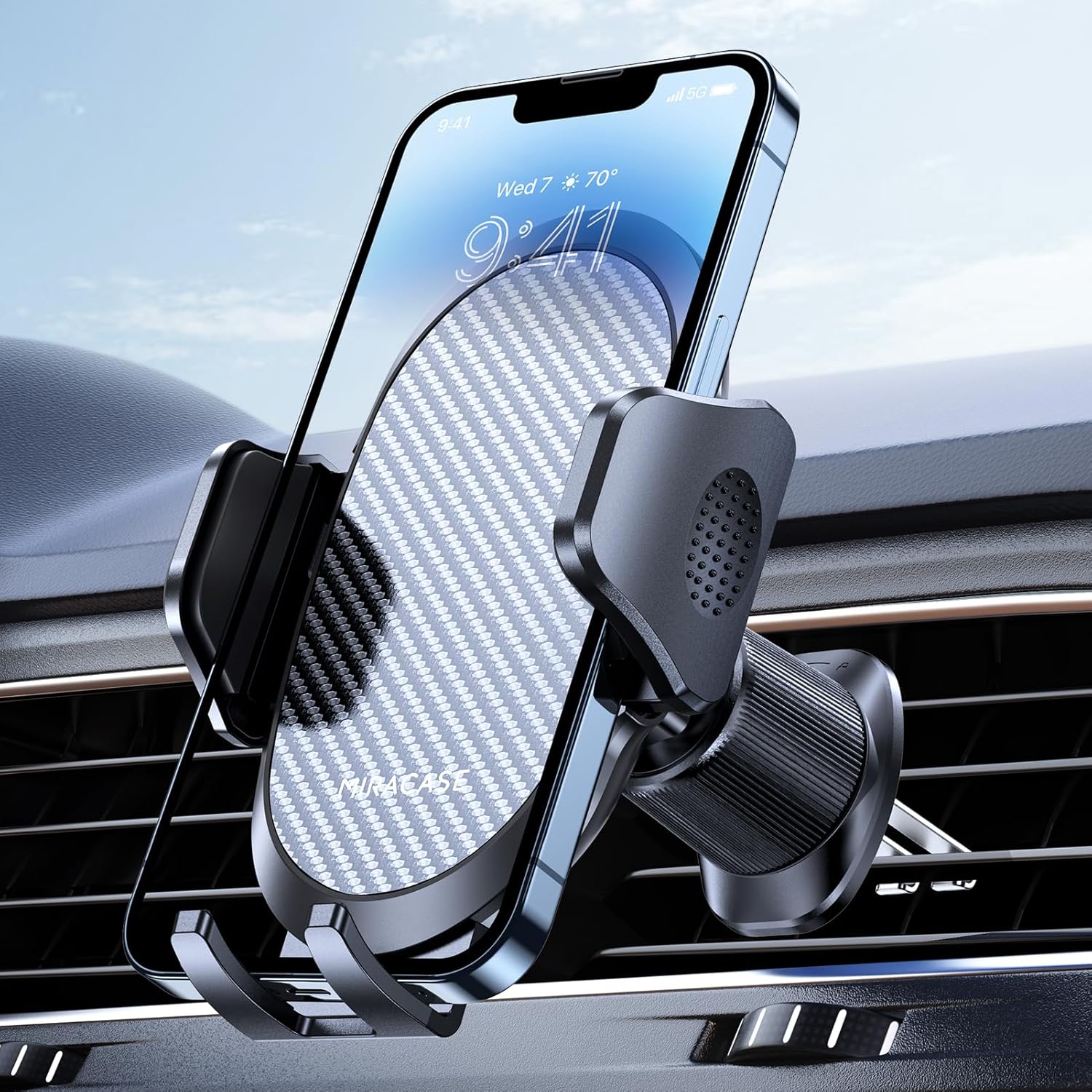
Useful benchmark for hook engagement consistency across mixed-road vibration.
Check Price on AmazonWeek two separated products by load path quality, not marketing language. Hooks with cleaner rear engagement and better front pressure distribution stayed calmer. Hooks that concentrated force in one narrow point were more likely to induce subtle slat twist, especially on thinner vertical vents.
This is where many buyers get frustrated: the mount itself can be strong, yet the vent hardware is the weak link. A mount that is overbuilt but poorly matched to your vent geometry can still become annoying.
For comparison anchors during this phase, I cross-checked behavior against Lamicall 2026 Wider Clamp Vent Mount Review: Strong Daily Value with Real Vent-Mount Limits, Miracase Metal Hook Vent Mount Review, and VANMASS 85+LBS Car Phone Mount Review: Strong Hold, Real-World Tradeoffs. The practical lesson was consistent: geometry fit beats spec-sheet swagger.
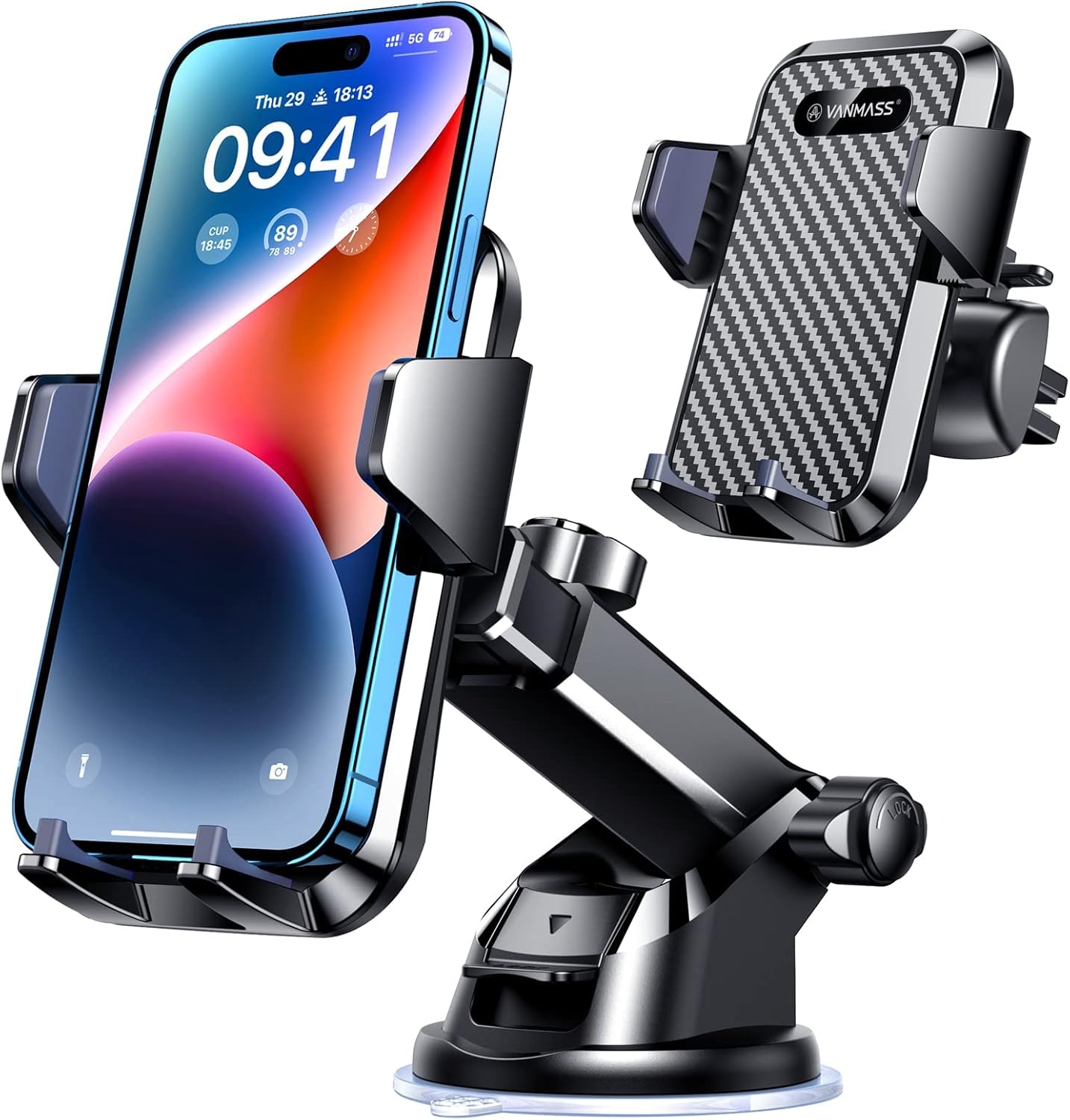
Multi-position control point to compare hook-only behavior against hybrid mounting options.
Check Price on AmazonWeek 3: Re-tightening rhythm appears
By week three, the key difference was not whether the mount could still hold the phone. Most could. The difference was re-tightening rhythm. Better units needed little to no weekly touch-up. Average units asked for small correction every few days, especially after rough-road sessions.
That small correction is what eventually makes a mount feel tiring. It is not one big failure. It is repeated little interruptions that pull attention away from driving routine.

Helpful alternative when vent slat fatigue makes CD-slot anchoring the better long-run choice.
Check Price on AmazonHeat also amplified existing weaknesses. After hot-cabin exposure, any setup that already had mild play in week two became more fussy. Better hook systems remained boring and consistent. In this category, boring is the compliment.
Week 4: What held up and what degraded
After 30 days, the strongest vent hook outcomes shared three traits: - deep and centered rear hook engagement - balanced front contact that avoided slat over-twist - short enough arm geometry to limit leverage wobble
The weaker outcomes followed a predictable pattern: - slight slat deformation or visible stress marks - gradual angle drift under repeated vibration - recurring re-tightening habit to preserve confidence
One useful side-by-side reality check came from CD Slot vs Vent Mount 30-Day Test: Stability, Reach, and Daily Usability in Older Cars. In older cabins with fragile vents, even a good hook mount can lose to a stable CD-slot anchor simply because the vent itself is not robust enough for long-run load.
What this means if you are buying now
If your vents are sturdy and geometry-compatible, a quality hook mount can be one of the best daily choices: fast, clean, and consistently easy to use. If your vents are thin, flexible, or already slightly loose, hook systems may still work short-term but are less likely to stay friction-free over a month.
A simple buying shortcut: - choose hook mounts when vent slats are strong and well-anchored - choose CD-slot or well-placed suction when vent slats are weak - prioritize low re-tightening frequency over flashy claims
For safety and longevity setup, pair this with How to Install a Phone Holder Without Damaging Your Car Dash and Heat and Shock Tests: Car Phone Mount Safety Explained. Installation discipline still matters, even with strong hardware.
Final human takeaway
Vent hook mounts can absolutely be excellent, but they are only as reliable as the vent they are anchored to. Over 30 days, the winning setups were the ones that stayed invisible in daily use: no constant re-tightening, no creeping angle, no growing distrust.
If you feel like you are adjusting your mount every few commutes, do not ignore that signal. It usually means the load path is wrong for your vent geometry, not that you are being too picky.
If you want the charging-focused companion to this vent stability test, read [Vent-Mounted Wireless Charger 30-Day Test: Cooling Limits, Charge Dropouts, and Real Summer Usability].
For a position-tuning companion focused on glare, reach, and one-hand docking geometry, see [Vent Mount Angle Optimization Test: 10 Position Setups Compared for Glare, Reach, and One-Hand Safety in Daily Driving].
For an acoustic-comfort companion focused on rattle and vent buzz, see [Car Phone Mount Noise Test: Rattle, Creak, and Vent Buzz Comparison Over 200 km of Mixed Roads].
For quick selection before deeper testing, use MagSafe vs Clamp vs Suction: Which Car Phone Holder Should You Buy in 2026? and Best Car Phone Holders by Driver Type: Commuter, Rideshare, Truck, Family, and Delivery Use Cases (2026).
For low-temperature startup behavior and first-dock consistency, see [Cold Morning Grip Test: 0-10°C Startups, Clamp Stiffness, and First-Dock Reliability Across Mount Types].
Review articles
View all →