
Phone Case Thickness Impact Test: 30-Day Docking Accuracy, Magnet Strength Drop, and Reposition Rate
Keywords: phone case thickness mount test, docking accuracy with thick case, magnet strength drop phone case, mount reposition rate test, magsafe case compatibility car mount, rugged case car mount performance
A mount can feel excellent with a bare phone and become frustrating once a thicker case enters daily use. Most people notice this as "random" misalignment, softer magnetic bite, or extra repositioning after bumps. The mount itself may not be failing. The case-to-mount interaction is what changes the real result.
This test tracks exactly that interaction over 30 days. I compared thin, medium, and thick case profiles across daily commuting to measure three practical outcomes: first-try docking accuracy, effective magnetic hold drop, and how often users need to reposition to keep maps readable.
For an eleven-day clamp rotation on Otterbox and PopSocket stacks (not magnet-only), read Thick-Case Phone Mount Week: 11 Days I Actually Drove (Miracase vs Lamicall vs iOttie on Otterbox & PopSocket Stacks).
If you want context before this deep dive, read Does Wireless Charging Work Through Rugged Phone Cases?, Magnetic Mount Stability Test: MagSafe vs Metal-Ring Setups on Real Roads, and One-Hand Docking Speed Test: 15 Mount Types Ranked by First-Try Success in Stop-and-Go Traffic. For rough-road correction behavior, Pothole Test for Car Phone Mounts: 100 Sharp Hits and First-10-Minute Re-Aim Results is a useful companion.
For a quick pre-filter before case-specific testing, use MagSafe vs Clamp vs Suction: Which Car Phone Holder Should You Buy in 2026? and Best Car Phone Holders by Driver Type: Commuter, Rideshare, Truck, Family, and Delivery Use Cases (2026).
How the 30-day case-thickness test was run
I used repeated route patterns with city stop-go traffic, vibration-heavy sections, and short highway stretches. Each mount was tested with the same phone platform while swapping case classes: - thin (minimal profile) - medium (typical protective daily case) - thick/rugged (higher offset + stronger shell)
Daily logs focused on: 1) first-try docking success rate 2) post-bump hold confidence 3) angle drift and re-aim count 4) one-hand dock/undock smoothness 5) charging alignment consistency on magnetic chargers 6) subjective confidence over repeated commutes

MagSafe baseline for measuring docking tolerance across thin-to-rugged case profiles.
Check Price on AmazonThe key metric was daily friction, not lab-force bragging. If a setup requires repeated small corrections, real usability drops quickly.
Week 1: thin and medium cases feel similar at first
In early days, thin and medium profiles stayed close for most quality mounts. Thick cases were more variable. Some performed acceptably with proper alignment, while others needed more deliberate placement to avoid subtle offset errors.
At this stage, many drivers assume "it works" and stop testing. The bigger differences showed up after repeated one-hand use and vibration exposure.
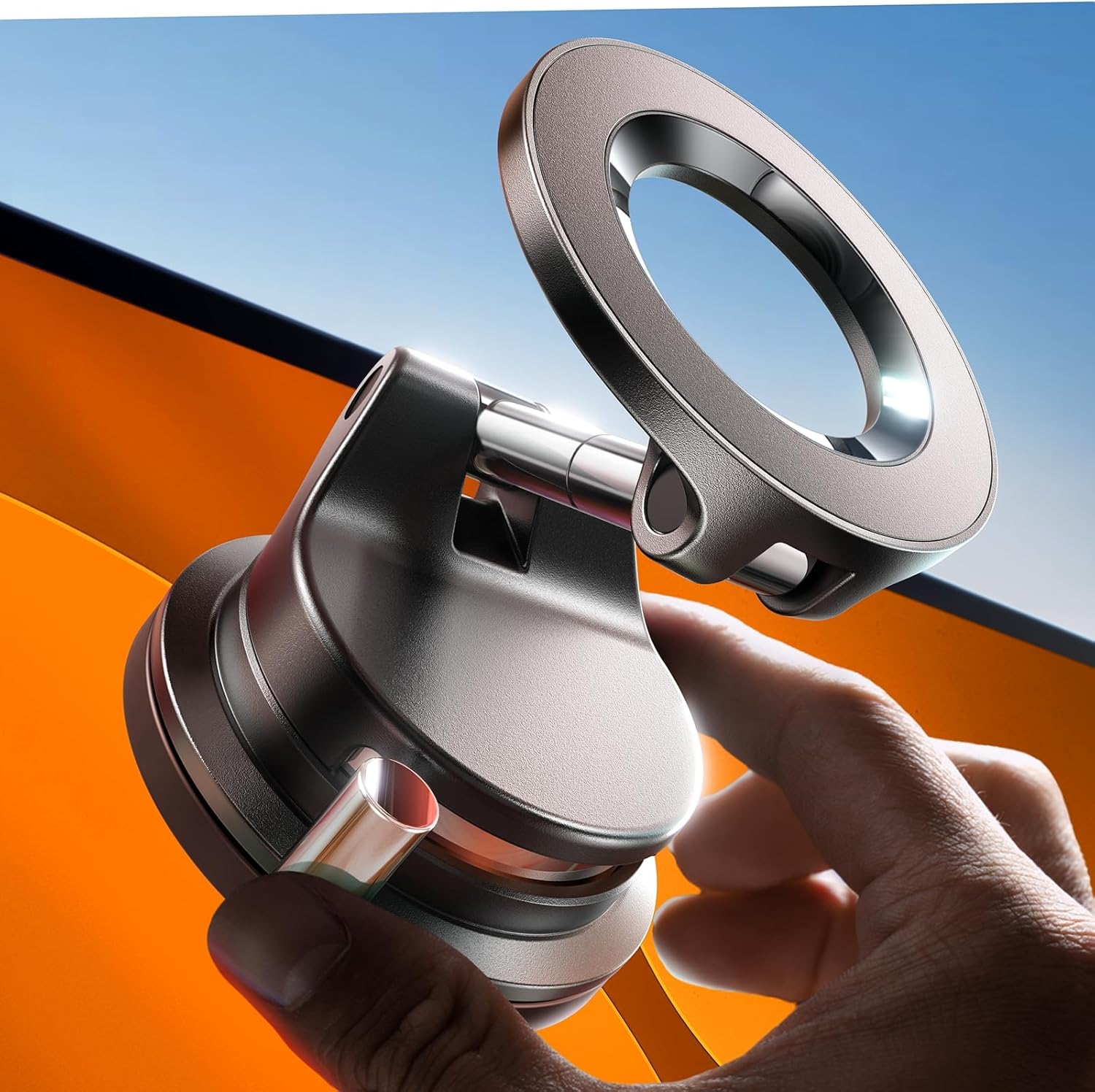
Useful control point for case-thickness effects on one-hand docking and angle retention.
Check Price on AmazonWeek 2: docking accuracy spread becomes obvious
By week two, first-try accuracy started separating case classes.
Thin cases remained the easiest for quick one-motion docking. Medium cases were generally reliable but slightly less forgiving when entering at an angle. Thick/rugged cases had the largest variance: good mounts still worked, weaker pairings needed more frequent second-attempt adjustments.
This was especially visible during fast red-light interactions, where small entry-angle errors become routine annoyance.

Comparison anchor for magnet confidence drift and reposition burden over repeated rough segments.
Check Price on AmazonWeek 3: magnetic confidence and reposition burden
This phase highlighted practical magnet-strength drop effects. Even when mounts did not fail outright, thicker case profiles reduced confidence margin after rough patches and abrupt braking.
The issue was often cumulative, not dramatic. A setup that "mostly holds" but asks for repeated micro re-aims still degrades driving workflow and trust.
Charging-capable magnetic setups also showed stronger sensitivity to exact alignment through thicker shells. The mount might hold physically, but charging consistency could become less predictable under daily motion.

Value-segment magnetic reference for real-world case compatibility and first-try dock behavior.
Check Price on AmazonWeek 4: real ownership verdict after 30 days
At day 30, the best outcomes shared two traits: - mount geometry that tolerated slight off-angle docking - magnetic/contact behavior with enough margin for medium-to-thick daily cases
Lower-ranked outcomes followed a predictable pattern: - rising second-try dock frequency - higher correction count after bumps - less stable glance angle by end of commute
This is where buyers misdiagnose problems. The mount may not be "bad." The case profile may be outside that mount's comfortable tolerance window.
What this means when buying
If you use a medium or thick case daily, evaluate mount choice through case-specific behavior, not bare-phone demos.
Practical filter: - first-try dock consistency with your actual case - low re-aim burden after rough segments - stable charging alignment if using magnetic charging - predictable one-hand workflow in stop-go traffic
If your setup performs great without a case but poorly with it, treat that as a compatibility signal, not user error.
Related reads to pair with this test
For charging-through-case behavior, review Does Wireless Charging Work Through Rugged Phone Cases?.
For long-run magnetic hold under road stress, pair with Magnetic Mount Stability Test: MagSafe vs Metal-Ring Setups on Real Roads.
For seasonal docking consistency, combine with Cold Morning Car Mount Test (0-10C): Clamp Stiffness and First-Dock Reliability.
Product-level references
These patterns align with practical behavior seen in VICSEED 2026 MagSafe Car Phone Holder: In-Depth Review, LISEN A608 MagSafe Vacuum Mount Review: Strong Hold, Fast Repositioning, and Real-Use Tradeoffs, BISART A7 Vacuum Magnetic Mount: Real-World Look at Suction, Magnets, and Mixed Reviews, and [Kaistyle Magsafe Car Mount Review: Strong Value Magnetic Dash Option].
These reviews are useful because they reflect repeated use with real-case variability, not single-session impressions.
Top-rated universal holders roundup (2026): Top-Rated Universal Car Phone Holders (2026): 30 Days I Rotated Clamps, 3-in-1 Kits, and Thick-Case Phones.
Final takeaway
Across 30 days, case thickness changed daily mount behavior more than most buyers expect. The right setup is not just "strong magnet" or "premium brand" - it is the combination that keeps first-try docking high and correction count low with your real case profile.
If your current mount feels inconsistent only when cased, trust that signal early. Case compatibility is a primary durability and usability factor, not a minor detail.
When thicker cases change tap precision during low-light navigation, pair with Night Driving Glare Test: Screen Brightness vs Mount Height for Safer Glance Time.
For tap precision when gloved or tense hands meet wet-weather stress, pair with Rain and Fog Readability Test: Wet Glass, Mount Height, and Safer Glance Time in Low-Contrast Weather.
When thicker cases force awkward touch angles that worsen polarized viewing cones, pair with Polarized Sunglasses Phone Screen Test: LCD vs OLED, Mount Angle, and Safer Glance Time in the Car.
Gloves stack tolerance the same way thick cases do. Field notes: Glove Season Car Phone Mount Docking Test: Thin Gloves, Liners, Cold-Stiff Clamps, and 10 Real Commutes.
Related foldable and oversized phone mount week: Foldable and Oversized Phone Week in the Car: Weight, Hinge Attitude, and Wireless Charging Alignment Games.
MagSafe wallet / PopSocket / ring stack mount diary: MagSafe Plus Wallet, PopSocket, and Ring Week in the Car: 12 Days of Dock Torque, Wireless Charging Honesty, and Mount Fit.
If you just upgraded phones, read iPhone 17 New Phone Week: 14 Days I Actually Drove (Case Stack, MagSafe & Clamp Mount Field Test) for the new-phone and case-stack retest week.
Review articles
View all →
