
Night Driving Glare Test: Screen Brightness vs Mount Height for Safer Glance Time
Keywords: night driving phone mount glare, car mount screen brightness safe glance, night navigation readability mount height, dashboard reflection phone mount night, safer glance time night driving, headlight bloom phone screen
Night driving is the mirror image of the summer-glare problem. In daylight, washout and harsh reflections often come from the sun. After dark, the more common failure mode is light in the wrong place at the wrong intensity: oncoming headlight bloom in peripheral vision, windshield smear and wiper streaks that catch dashboard glow, and a phone screen that is either too bright in an adapted-dark cabin or too dim to read on the first try.
This field-style test isolates two levers drivers actually control in software and placement: screen brightness strategy (including auto-brightness behavior and how aggressively you run maps at night) and mount height (how high the phone sits relative to a natural forward sight line). The outcome metric is not a lab lux number. It is safer glance time - how long your eyes leave the road to confirm the next maneuver, and how often a second look is required because the first glance failed.
If you want parallel daylight results first, read Summer Sun Glare Readability Test: 12 Mount Positions Compared for Navigation Legibility and Safer Glance Time. For placement fundamentals that matter at night as well - tilt and reach still decide whether you fight reflections - read Vent Mount Angle Optimization Test: 10 Position Setups for Glare, Reach, and One-Hand Safety and Phone Mount Micro-Vibration Test: 60-Minute Highway Blur and Readability Across Mount Types, because shimmer and micro-blur punish night readability faster than midday brightness. For how display load, charging, and heat interact with sustained brightness during real commuting, read Wireless Car Charger 45-Minute Commute Test: Battery Gain vs Screen Brightness, GPS Load, and Heat. For orientation tradeoffs on tight urban grids versus wider interchanges, read Portrait vs Landscape Navigation Test: 30-Day Turn-Clarity, Lane-Change Confidence, and Touch Error Rate. For shared vehicles where someone else adjusts brightness or re-aims the mount, read Passenger-Side Reach Test: 25 Daily Hand-Off Scenarios for Driver-Passenger Sharing, Dock Speed, and Safety. For how case thickness changes tap precision at arm length, read Phone Case Thickness Impact Test: 30-Day Docking Accuracy, Magnet Strength Drop, and Reposition Rate.
For style-level selection before night optimization, read MagSafe vs Clamp vs Suction: Which Car Phone Holder Should You Buy in 2026? and Best Car Phone Holders by Driver Type: Commuter, Rideshare, Truck, Family, and Delivery Use Cases (2026).
How the night-drive test was run
I used repeated night commute blocks: unlit suburban roads, well-lit arterials, and short highway segments with mixed truck lighting and guard-rail spill. I cycled through controlled combinations of:
- three brightness strategies: conservative manual low, mid manual, and auto-brightness with a disciplined reset after major lighting transitions - three mount height bands: low (closer to the console), mid (near instrument-cluster sight line), and high (closer to windshield center)
Each block logged:

Vent-height reference for controlling night reflections without blocking forward sight lines.
Check Price on Amazon1) first-glance success reading the next maneuver line 2) whether a second glance was needed within five seconds 3) subjective headlight-bloom discomfort when opposing traffic was heavy (1-5 scale) 4) reflection interference between dash trim, glass, and the map layer 5) touch interactions aimed only at display brightness, zoom, or mount angle (not intentional route edits) 6) how quickly attention felt comfortable returning to the road scene after each glance
The primary outcome was practical: fewer failed first glances and fewer second looks during active merge and lane-change timing.
Phase 1: brightness strategy without changing mount height
Early runs showed that auto-brightness is not automatically wrong, but it is not automatically safety-first either. After stops under bright streetlights, some phones ramped up aggressively and stayed hot-bright into darker segments. That created a persistent glow pool in lower vision and encouraged longer stares right when peripheral cues mattered most.
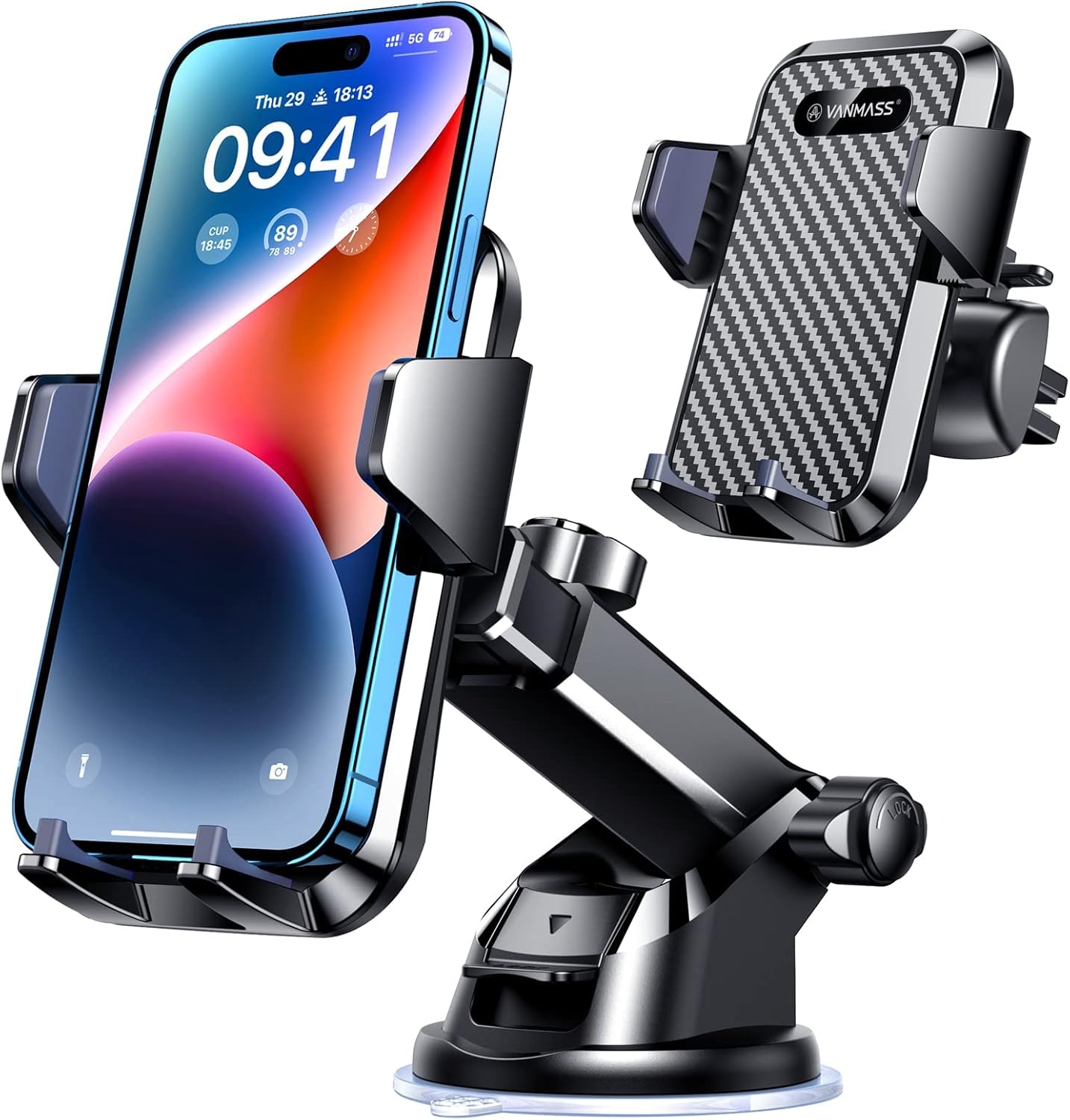
Hybrid reach for mid versus high placement when cabins vary in dash depth and windshield angle.
Check Price on AmazonA stable mid manual band, adjusted once at the start of a truly dark rural segment, often produced shorter, more confident glances than letting the phone chase every pole light. The lesson was adaptation: the screen that looked ideal beside a gas pump could feel harsh two minutes later on a tree-lined road.
Phase 2: mount height changes with brightness held steady
With brightness locked to a comfortable band per vehicle, height became the dominant geometry variable.
Lower mounts sometimes kept the forward horizon visually dominant, which can feel reassuring when you do not want the map competing with distance cues. They also increased eye travel and subtle head drop, which lengthened glance time when prompts stacked quickly.
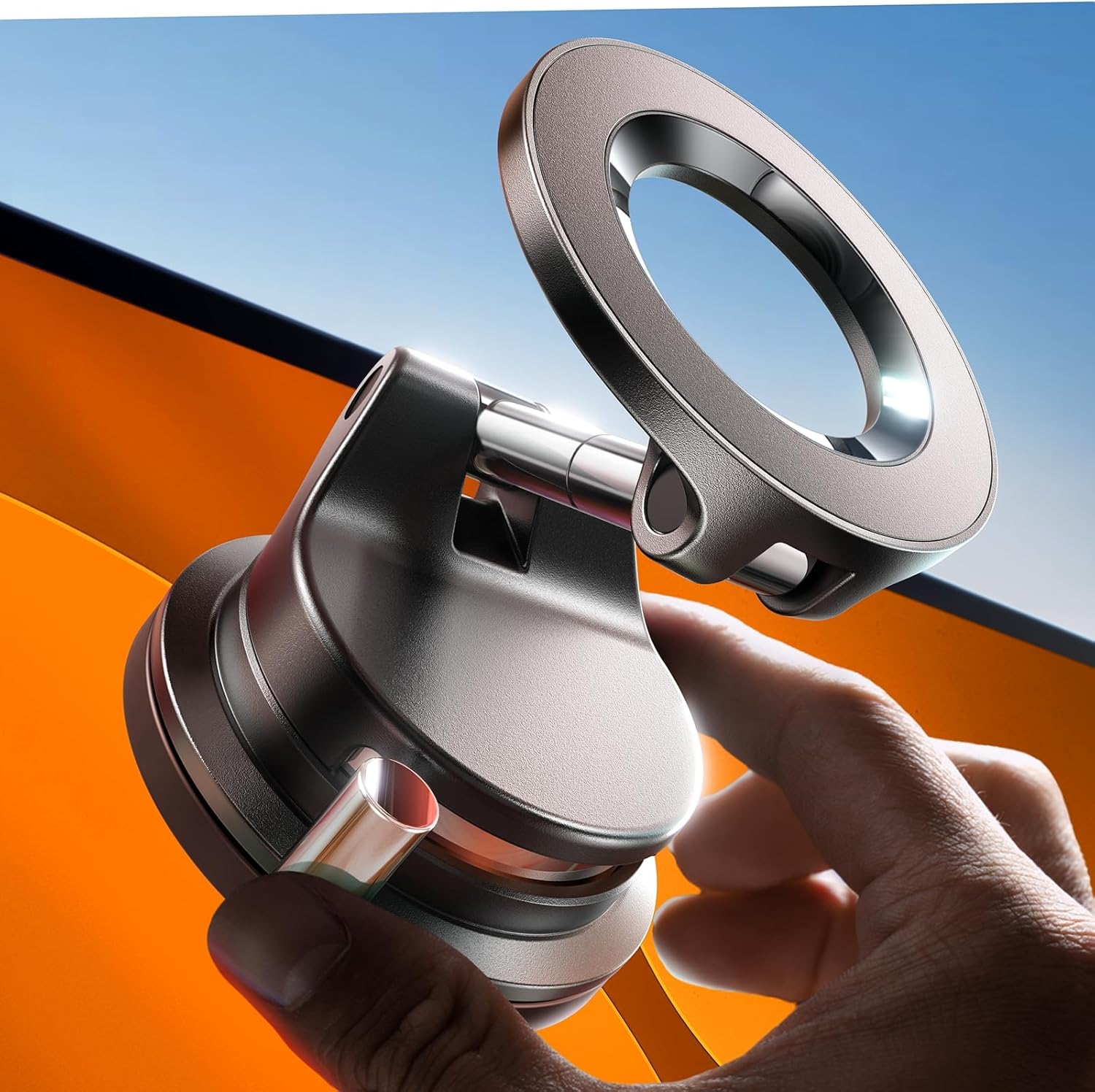
Tri-axis tuning for separating map tilt from reflection bands after dark.
Check Price on AmazonMid-height positions most often produced the best composite score: shorter eye travel, less parallax on lane graphics, and more predictable one-hand reach if a quick zoom or voice confirmation was needed.
Higher mounts occasionally helped in taller cabins where mid placement was awkward, but they intersected more often with windshield reflection bands and oncoming flare, especially after rain or with interior surfaces that throw soft glow upward.
That is why product-level behavior still matters after dark. Field notes from Lamicall 2026 Wider Clamp Vent Mount Review: Strong Daily Value with Real Vent-Mount Limits, VANMASS 85+LBS Car Phone Mount Review: Strong Hold, Real-World Tradeoffs, LISEN A608 MagSafe Vacuum Mount Review: Strong Hold, Fast Repositioning, and Real-Use Tradeoffs, and VICSEED 2026 MagSafe Car Phone Holder: In-Depth Review are not only about grip - they are about whether aim stays trustworthy after you touch the phone once.
Phase 3: interaction effects (how brightness and height combine)

Magnetic dashboard baseline for stable glance line after one-hand brightness or zoom taps.
Check Price on AmazonThe meaningful finding was interaction. The strongest night setups shared a repeatable pattern:
- mid-height placement with modest downward tilt so the map escaped the brightest reflection cone off the glass - brightness high enough for reliable first-glance decoding but low enough to avoid blooming across dark-adapted vision - stable arm geometry so the map did not shimmer on rough asphalt - the same stability theme as Mount Arm Joint Fatigue Test: 45-Day Hinge Wear, Sag Rate, and Re-Tightening Frequency Across Mount Types
The weakest patterns were predictable:
- very high mount plus aggressive brightness after leaving a lit parking lot - very low mount plus an overly dim screen, which pushed extra zoom and lean-in corrections - frequent angle micro-corrections because daytime heat cycles had already softened hinge feel - a bridge to rough-road recovery in Pothole Test for Car Phone Mounts: 100 Sharp Hits and First-10-Minute Re-Aim Results
Practical night-driving checklist
- Set brightness for the darkest segment you expect in the next ten minutes, not for the lot you just left. - Prefer mid-height and conservative tilt; reserve high mounts for cabins where mid placement is physically blocked. - After rain, wax residue, or a dirty inner glass film, expect reflections to punish higher placements faster. - Track failed first glances for one week. If the count stays high, adjust geometry before blaming the map app.
Window tint phone mount placement week: Window Tint and Phone Mount Week: Placement, Glare, and Readability (12 Days I Actually Drove).
Final takeaway
Night driving rewards the same discipline as summer glare, only inverted: control stray light, shorten glance distance, and avoid unnecessary contrast spikes. Across brightness-by-height trials, safer glance time improved most when drivers treated screen brightness and mount height as one tuned system.
If navigation feels harsh after dusk even when the mount is mechanically stable, adjust height and tilt first, then brightness. Geometry usually moves first-glance success more reliably than pushing brightness alone.
For the daylight counterpart to this readability study, see Summer Sun Glare Readability Test: 12 Mount Positions Compared for Navigation Legibility and Safer Glance Time.
For core angle and reach tuning, see Vent Mount Angle Optimization Test: 10 Position Setups for Glare, Reach, and One-Hand Safety.
For charging-load context that affects how hard the phone works while navigating, see Wireless Car Charger 45-Minute Commute Test: Battery Gain vs Screen Brightness, GPS Load, and Heat.
For low-contrast weather where wet streaks and mist matter as much as brightness, see Rain and Fog Readability Test: Wet Glass, Mount Height, and Safer Glance Time in Low-Contrast Weather.
For daytime polarized-lens interactions with phone panels and mount tilt-not only nighttime brightness-see Polarized Sunglasses Phone Screen Test: LCD vs OLED, Mount Angle, and Safer Glance Time in the Car.
For sensor-safe windshield placement around mirror camera zones during night commutes, see ADAS Camera and Sensor Safe-Zone Test: Phone Mount Placement for Lane-Assist, Rain Sensor, and Driver Visibility.
For HUD-projection overlap and ghosting risk while tuning night placement, compare with HUD Reflection Interference Test: Phone Mount Position vs Windshield Ghosting, Night Contrast, and Safer Glance Time.
For night routing where app overlay density changes glance load beyond brightness tuning, see Map-App UI Density Test: Google Maps vs Apple Maps vs Waze on Mount Readability, Touch Error Rate, and Safer Glance Time.
When a dash cam and phone mount both sit on the glass, night glare stacks differently than a phone alone. Compare notes in Dash Cam and Phone Mount Together: 14-Day Windshield Zoning Test (Visibility, Cable Clutter, and Night Glare).
Mirror edges and phone bloom compete after dark. Compare Baby Mirror and Phone Mount Together: Sightline Triangle Test (Forward Scan, Rear-Seat Checks, and Safer Glance Time).
Gig delivery shift simulator mount diary (maps, timers, messaging): Gig Delivery Shift Simulator Phone Mount Test: 10 Days of Maps, Timers, Messaging, and Dock Fatigue.
Speakerphone and voice assistant mount placement diary: Speakerphone and Voice Assistant Week: Mount Height, Cabin Noise, and the Geometry of “Can You Hear Me Now”.
Lake weekend field log: Lake Weekend Field Test: Gravel Lots, Bug Spray Film, and Whether My Vent Mount Survived Cabin Chaos (9 Days I Actually Drove).
Summer thunderstorm detour week test: Summer Thunderstorm Detour Week Test: Wipers, Low Contrast, and Whether My Mount Still Made Maps Readable (11 Days I Actually Drove).
Review articles
View all →![ANDERY Car Phone Holder for Magsafe [78+LBS Strongest Suction] - article prod...](https://m.media-amazon.com/images/I/41vEvhI9M7L._AC_SL1500_.jpg)
