
Rain and Fog Readability Test: Wet Glass, Mount Height, and Safer Glance Time in Low-Contrast Weather
Keywords: rain fog phone mount readability, wet windshield navigation glance time, car mount low contrast weather, safer glance time rain driving, phone mount height fog, wet glass map legibility
Rain, mist, and fog do not feel like "extreme" conditions until navigation has to be right on the first try. A mount can be rock solid, but if the glass in front of you is optically busy - wiper bands, smeared water, low-contrast gray light, and scatter from oncoming lamps on wet asphalt - the map can turn into a soft, low-contrast layer that demands a second look at the worst time.
This test is about that real-world problem. I ran repeated low-contrast weather commutes to compare how mount position (especially height and tilt) and a few display habits change first-glance success when the world outside the glass is already visually noisy. The goal is the same as other readability studies on this site: safer glance time - fewer failed first reads and fewer correction touches while you are still managing traction, lane position, and speed judgment.
If you want the daylight glare baseline first, read Summer Sun Glare Readability Test: 12 Mount Positions Compared for Navigation Legibility and Safer Glance Time. For the night-driving counterpart focused on brightness versus height, read Night Driving Glare Test: Screen Brightness vs Mount Height for Safer Glance Time. For foundational placement geometry that matters in every lighting condition, read Vent Mount Angle Optimization Test: 10 Position Setups for Glare, Reach, and One-Hand Safety. For windshield placement tradeoffs that become obvious when glass quality varies day to day, read Windshield Phone Mount 30-Day Real-World Test: Visibility, Stability, and Daily Pros/Cons. For shimmer and micro-blur that feel worse when contrast is already thin, read Phone Mount Micro-Vibration Test: 60-Minute Highway Blur and Readability Across Mount Types. For orientation choices when lane detail matters in messy visibility, read Portrait vs Landscape Navigation Test: 30-Day Turn-Clarity, Lane-Change Confidence, and Touch Error Rate. For shared cabins where someone else reaches for brightness during rough weather, read Passenger-Side Reach Test: 25 Daily Hand-Off Scenarios for Driver-Passenger Sharing, Dock Speed, and Safety. For case thickness effects on tap precision when you cannot afford a miss-tap, read Phone Case Thickness Impact Test: 30-Day Docking Accuracy, Magnet Strength Drop, and Reposition Rate. For long-run angle drift that shows up as "why does my map look lower today," pair with Mount Arm Joint Fatigue Test: 45-Day Hinge Wear, Sag Rate, and Re-Tightening Frequency Across Mount Types and Pothole Test for Car Phone Mounts: 100 Sharp Hits and First-10-Minute Re-Aim Results.
For quick fit before deep weather tuning, also use MagSafe vs Clamp vs Suction: Which Car Phone Holder Should You Buy in 2026? and Best Car Phone Holders by Driver Type: Commuter, Rideshare, Truck, Family, and Delivery Use Cases (2026).
How the rain-and-fog readability test was run
I used overlapping route types where low contrast is common: light-to-moderate rain with highway spray, city streets with stop-and-go reflections off hood and dash, and morning fog banks where depth cues flatten and lane paint disappears sooner than your brain expects. I avoided outright hydroplaning conditions on purpose; this is a readability test, not a traction stunt.
Across sessions I varied:
- three mount height bands: low (console-adjacent), mid (near cluster sight line), and high (closer to windshield center) - tilt discipline: conservative versus slightly aggressive up-tilt - map presentation habits: higher-contrast map theme where available, slightly larger instruction text, and deliberate avoidance of ultra-low brightness "because it looks softer"

Vent reference when you want the phone out of the wet-windshield streak band without awkward reach.
Check Price on AmazonEach session logged:
1) first-glance success reading the next maneuver line 2) whether a second glance was needed within a few seconds 3) how often water streaks or fog patches visually intersected the phone's region versus the road scene 4) touch corrections aimed only at angle, brightness, or zoom (not rerouting) 5) confidence returning eyes to the road after each glance 6) mount stability feel over expansion joints and uneven wet pavement (context for vibration coupling)
Phase 1: wet glass without changing your mental model
Early sessions made one thing obvious: many drivers blame the phone when the windshield is the variable. Smear near wipers, uneven coating, and dusty inner glass turn small glare problems into big contrast problems - especially when droplets catch streetlight and headlight scatter.
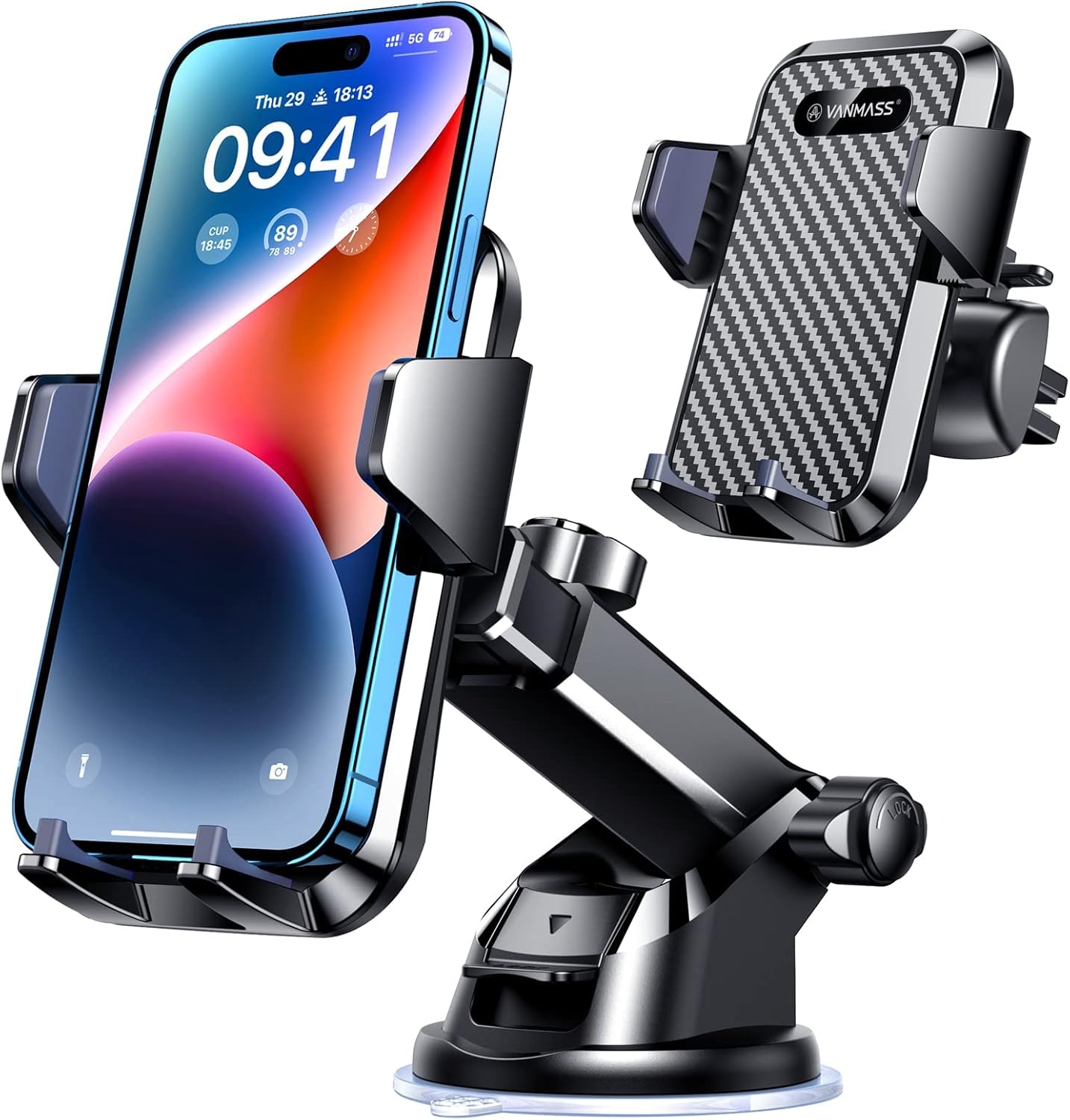
Hybrid baseline for comparing mid versus high placement near glass in changing rain conditions.
Check Price on AmazonIn those conditions, mid-height placement often won simply because it reduced competition between the map and the noisiest band of the windshield. Very high mounts sometimes looked "closer to eye level" in theory, but in practice they intersected more random streak geometry and felt less forgiving when the glass was imperfect.
Phase 2: mount height with brightness held deliberately stable
With brightness locked to a readable mid band for each phone (and manual lock where auto kept wandering in gray light), height separated winners faster than brand loyalty.
Lower mounts sometimes kept the forward scene more dominant, which can feel safer emotionally in heavy rain. They also increased glance travel and encouraged longer eye-off-road moments when instructions stacked quickly.
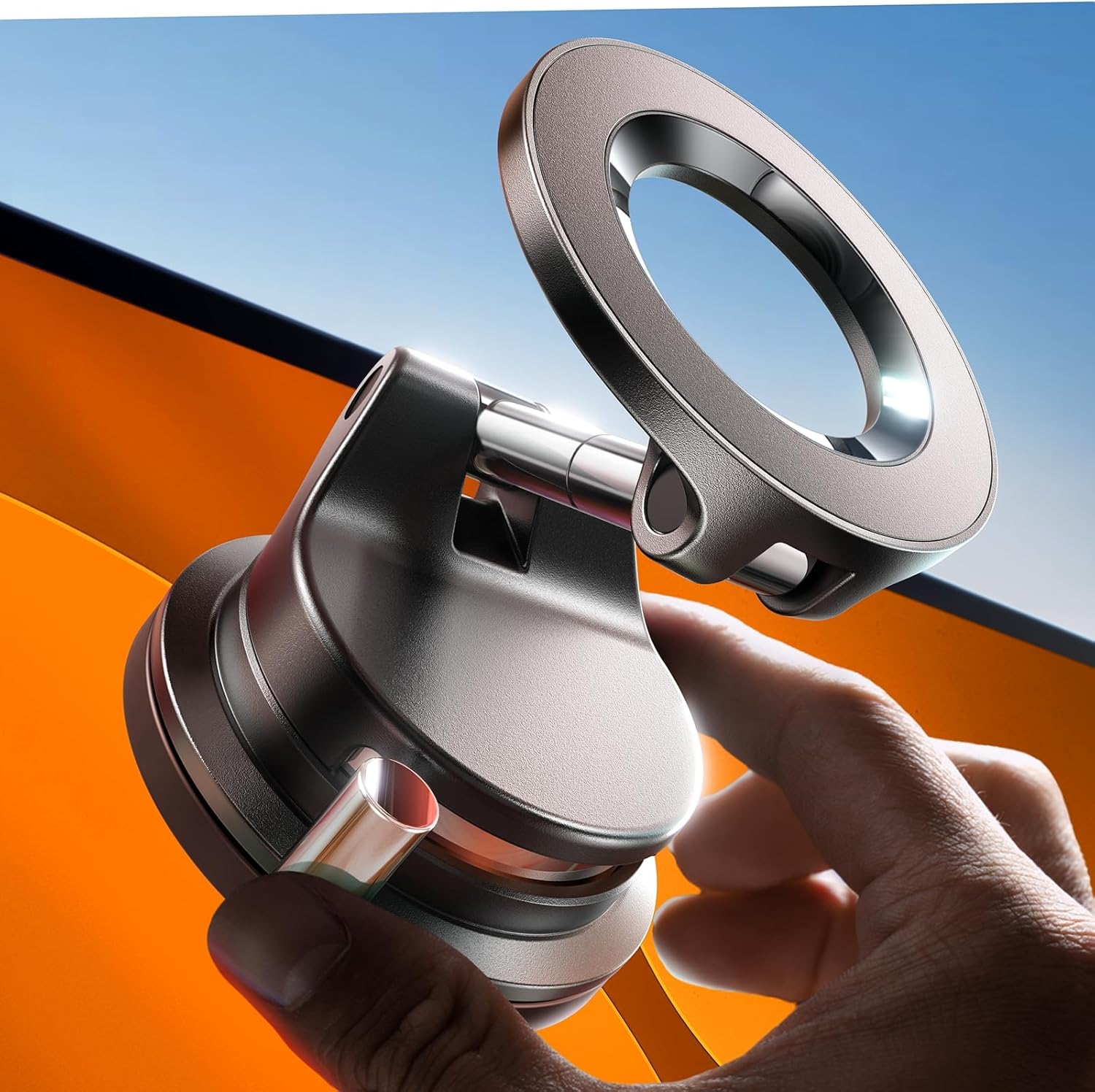
Tri-axis adjustability for separating tilt from streaky windshield zones after repositioning.
Check Price on AmazonMid-height positions most often produced the best composite: shorter glance travel, less parallax on lane graphics, and fewer accidental interactions when the cabin is busy.
Higher mounts were situational. In some tall cabins they helped. In many compact cabins they pushed the screen into a zone where wiper patterns and micro-droplets created more "sparkle" noise than useful contrast.
This is where real mount behavior from owner-style reviews still matters. Patterns discussed in Lamicall 2026 Wider Clamp Vent Mount Review: Strong Daily Value with Real Vent-Mount Limits, VANMASS 85+LBS Car Phone Mount Review: Strong Hold, Real-World Tradeoffs, LISEN A608 MagSafe Vacuum Mount Review: Strong Hold, Fast Repositioning, and Real-Use Tradeoffs, and VICSEED 2026 MagSafe Car Phone Holder: In-Depth Review help because they reflect repeated touch-and-read habits, not showroom installs.
Phase 3: fog and mist where the road goes low-contrast first

Magnetic dashboard anchor for stable glance return after quick brightness or zoom tweaks in fog.
Check Price on AmazonFog-heavy runs changed the ranking again. When depth cues collapse, drivers tend to zoom mentally - and they also zoom maps. That increases interaction load at the exact moment fine motor targeting is worse.
The better setups reduced unnecessary zoom gestures by keeping orientation and text size predictable, and by keeping tilt conservative so the screen did not become a second "bright rectangle" floating above a gray scene.
Phase 4: interaction effects - why rain is not "just bad weather"
The strongest outcomes shared a pattern:
- mid-height placement with modest tilt, prioritizing a stable contrast island over "perfectly centered in the windshield" - brightness high enough to maintain edge definition on map lines, but not so high that the screen becomes its own distraction against fog - stable arm geometry so small bumps did not turn into shimmer during already-thin contrast
The weakest outcomes were predictable:
- aggressive up-tilt that intersected streak physics more often - very dim screens that forced repeated brightness bumps while moving - frequent micro-aim corrections because joints had already softened - the same hidden tax described in Mount Arm Joint Fatigue Test: 45-Day Hinge Wear, Sag Rate, and Re-Tightening Frequency Across Mount Types
Practical checklist for wet and fog driving
- Clean the inside glass when you blame the phone; inner film is a readability thief in gray light. - Prefer mid-height first; raise placement only if your cabin forces long eye travel at mid positions. - Lock brightness manually during steady gray rain if auto swings distract you. - Track failed first glances for a week; if the count stays high, assume geometry and glass before upgrading hardware.
Final takeaway
Rain and fog punish mounts that only looked "fine" in bright, high-contrast sunshine. Across these sessions, safer glance time improved most when drivers treated mount height, tilt, and screen contrast as one system - and when they recognized wet glass as part of that system.
If your navigation feels unreadable only during weather, start with placement and inner-glass condition before chasing a new holder.
For summer-specific glare positioning, see Summer Sun Glare Readability Test: 12 Mount Positions Compared for Navigation Legibility and Safer Glance Time.
For night-driving brightness strategy paired with height, see Night Driving Glare Test: Screen Brightness vs Mount Height for Safer Glance Time.
For charging load and heat behavior that can indirectly affect sustained brightness during long wet commutes, see Wireless Car Charger 45-Minute Commute Test: Battery Gain vs Screen Brightness, GPS Load, and Heat.
For dashboard suction behavior when humidity and temperature cycling stress seals, see Dashboard Suction Mount 30-Day Test: Heat Fade, Re-Stick Reliability, and Windshield Vibration Drift.
For polarized sunglasses effects in harsh sun versus gray rain light when readability fails for different reasons, see Polarized Sunglasses Phone Screen Test: LCD vs OLED, Mount Angle, and Safer Glance Time in the Car.
For rain-sensor neighborhood placement and ADAS-safe visibility strategy, compare with ADAS Camera and Sensor Safe-Zone Test: Phone Mount Placement for Lane-Assist, Rain Sensor, and Driver Visibility.
For wet-glass nights where HUD reflection layers can compound map ghosting, see HUD Reflection Interference Test: Phone Mount Position vs Windshield Ghosting, Night Contrast, and Safer Glance Time.
For low-contrast weather where map UI density can magnify readability friction, compare with Map-App UI Density Test: Google Maps vs Apple Maps vs Waze on Mount Readability, Touch Error Rate, and Safer Glance Time.
Wet-road visibility tests differ from tunnel-wash mechanical stress on mounts. Compare with Touch Car Wash Survival Test: When Your Phone Mount Is in the Brush Zone (Suction, Vent Hook, and Adhesive).
Winter wet-cabin suction and adhesive re-seat diary: Winter Wet-Cabin Week: Snow Melt, Humidity, and Suction Re-seat Honesty After Real Slush Days. Pollen Season Field Test: Yellow Windshield Film, Dash Wipes, and Whether My Mount Still Trusted Suction (11 Days I Actually Drove).
Summer thunderstorm detour week test: Summer Thunderstorm Detour Week Test: Wipers, Low Contrast, and Whether My Mount Still Made Maps Readable (11 Days I Actually Drove).
Review articles
View all →![ANDERY Car Phone Holder for Magsafe [78+LBS Strongest Suction] - article prod...](https://m.media-amazon.com/images/I/41vEvhI9M7L._AC_SL1500_.jpg)
